A leaking or damaged RV holding tank doesn’t always mean you need a complete replacement!
Your RV’s plumbing and holding tank systems are essential for comfortable traveling and camping. Whether you own a motorhome, fifth wheel, travel trailer, or toy hauler, a damaged fresh water, gray water, or black water holding tank can quickly turn into a frustrating and expensive problem.
At California RV Specialists in Lodi, California, we provide professional RV holding tank inspections, repairs, and replacements. Depending on the type of damage, tank material, and overall condition, we may be able to repair your existing holding tank rather than replace it.
Understanding Your RV’s Three Holding Tank Systems
Most recreational vehicles have three types of water storage tanks, each serving a different purpose.
Fresh Water Tanks: Store the clean water used for sinks, showers, toilets, and other plumbing fixtures. Leaks can result in water loss, reduced water pressure, and potential damage to surrounding components.
Gray Water Tanks: Collect wastewater from sinks, showers, and sometimes washing machines. Cracks, damaged fittings, and leaking connections can allow wastewater to escape underneath the RV.
Black Water Tanks: Hold wastewater from the RV toilet. Damage to these tanks can cause unpleasant odors, sanitation concerns, and wastewater leaks that require prompt attention.
Each tank is manufactured using specific materials and construction methods. Properly identifying the tank material is important when determining whether a repair is possible.

Common Causes of RV Holding Tank Damage
RV holding tanks can develop problems for several reasons, including:
- Road debris striking exposed tanks or plumbing connections.
- Improper tank mounting or inadequate support.
- Excessive movement and vibration during travel.
- Freezing temperatures causing water to expand inside the tank.
- Cracked fittings, damaged drain connections, or deteriorated seals.
- Aging plastic materials and repeated stress around mounting points.
Sometimes what appears to be a cracked holding tank is actually a leaking plumbing fitting, drain valve, or connection. Identifying the source of the leak can prevent unnecessary replacement costs.
Can a Cracked RV Holding Tank Be Repaired?
In some cases, yes!
At California RV Specialists, we have experience repairing certain damaged plastic RV holding tanks using specialized repair methods and materials.
Depending on the tank’s construction, damage location, and accessibility, repair may be a practical alternative to purchasing and installing a new tank.
However, not all holding tanks are repairable. Extensive cracking, severely deteriorated plastic, damage near critical mounting locations, or incompatible materials may require complete replacement.
The goal is to provide a reliable, long-term solution rather than simply covering a leak with sealant.
RV Holding Tank Repair vs. Replacement
Replacing an RV holding tank can become expensive, especially when the original tank is discontinued or difficult to obtain.
Some tanks require extensive labor to access and remove, including removing underbelly panels, plumbing connections, mounting supports, and surrounding components.
When appropriate, repairing the original tank may help reduce replacement part costs and avoid the difficulty of locating an exact replacement.
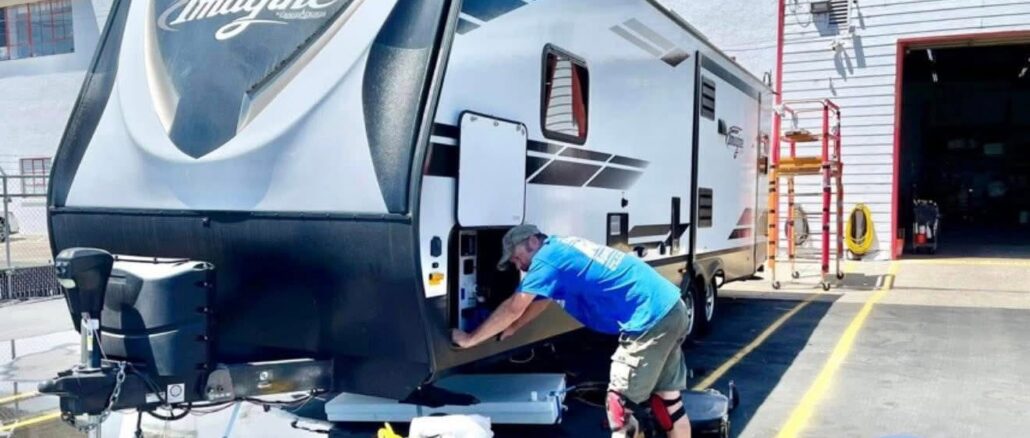
Our technicians evaluate the damage, determine whether a suitable repair method is available, and inspect the tank and plumbing connections before recommending a solution.
Repairs should be tested for leaks before the RV is returned to service.
Signs Your RV Holding Tank May Be Leaking
Watch for these common warning signs:
- Water dripping from underneath the RV.
- Unexplained loss of fresh water.
- Wastewater leaking when the gray or black tank is full.
- Unusual odors around the RV’s underbelly.
- Wet or sagging underbelly material.
- Leaks appearing only when draining or filling a tank.
- Visible cracks around fittings, outlets, or mounting areas.
If you notice these symptoms, avoid continued use of the affected tank until the source of the problem has been identified.
Why Professional Inspection Matters
RV holding tanks are often installed in difficult-to-access areas, making it challenging to determine where a leak originates.
An inspection may reveal damaged fittings, plumbing connections, mounting concerns, or structural problems that contributed to the original failure.
Repairing the tank without addressing the underlying cause can result in repeated damage.
At California RV Specialists, our goal is to identify the problem, explain the available repair options, and help RV owners make informed decisions about maintaining their RV.
Schedule Your RV Holding Tank Inspection
Whether you’re dealing with a cracked fresh water tank, leaking gray water tank, or damaged black water holding tank, our experienced RV technicians can help determine the appropriate repair or replacement solution.
Don’t let a leaking holding tank interrupt your next RV adventure!
Contact California RV Specialists to discuss your RV holding tank concerns and schedule an inspection.
Contact California RV Specialists
California RV Specialists – Independent RV Service & Repair Facility
Address:
200 S. Cherokee Lane
Lodi, CA 95240
Phone: (209) 263-7040
Website: www.calrvspecialists.com
Business Hours:
Monday – Friday: 8:00 AM – 4:00 PM
Lunch: 12:00 PM – 1:00 PM
Saturday & Sunday: Closed
Serving RV Owners Since 2003
We proudly serve RV owners throughout Lodi, Stockton, Galt, Elk Grove, Sacramento, Modesto, and surrounding Northern California communities.
We Don’t Sell RVs – We Repair the RV You Own!
More from Dustin
Make sure you check out my website, California RV Specialists, and our YouTube channel for more helpful information, and see our published articles on RVtravel.com and other social media pages.
- RV Underbelly Repair Tape: For compatible underbelly material seams and minor tears.
- Cable Ties & Proper Supports: For securing compatible wiring and plumbing without pinching or damaging components.
- Approved Foil HVAC Tape: For appropriate heating duct connections and repairs.
- Compatible Insulation: For replacing damaged insulation or improving coverage.
- Suitable Sealants or Foam: For sealing approved penetrations without interfering with moving parts, drainage, ventilation, or future service access.