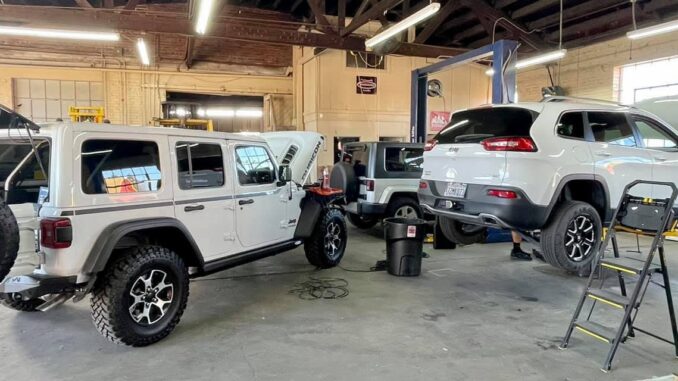
If you already have a vehicle set up to flat tow behind your motorhome, it’s easy to think the hard part is over.
The base plate is installed. The tow bar is connected. The wiring works. The braking system is there.
Hook it up and go—right?
Not necessarily.
A flat tow system is made up of multiple mechanical, electrical and safety components, and those components are exposed to road vibration, weather, dirt, moisture, movement and thousands of miles of towing.
At California RV Specialists in Lodi, California, we recommend periodically inspecting and maintaining your flat tow equipment according to the component manufacturers’ requirements.
A problem with something as simple as a worn pin, loose fastener or damaged electrical connection can become much more serious when you’re towing a vehicle behind a motorhome.
Your Flat Tow System Is More Than a Tow Bar
When most RV owners think about their flat tow system, the tow bar is usually the first thing that comes to mind.
But a complete four-down towing system may include:
Tow Bar • Base Plate • Attachment Points • Safety Cables • Pins & Clips • Supplemental Braking System • Breakaway System • Tow Vehicle Wiring • Electrical Connections • Charge Line • Receiver Adapters • Additional Vehicle-Specific Components
All of these components work together.
That’s why inspecting only the tow bar doesn’t necessarily mean you’ve inspected the complete towing system.
Inspect the Tow Bar
Your tow bar is one of the primary structural connections between the motorhome and the vehicle being towed.
Depending on the manufacturer and model, inspection and maintenance requirements will vary.
Areas that may need attention include:
- Arms and extension mechanisms
- Pivot points
- Locking mechanisms
- Bushings
- Connection points
- Pins and retaining clips
- Fasteners
- Boots and protective components
- Signs of corrosion
- Unusual movement or excessive play
- Bent, cracked or damaged components
- Binding or difficulty extending and retracting
If the tow bar doesn’t operate as smoothly as it once did, don’t simply assume that’s normal because it’s getting older.
Binding, excessive looseness or unusual movement deserves attention.
Always follow the tow-bar manufacturer’s current inspection, cleaning, lubrication, service and replacement recommendations.
Check the Pins, Clips & Connection Points
Some of the smallest parts of a flat tow system perform extremely important jobs.
Pins, clips, locking devices and attachment points should be inspected for wear, deformation, damage, corrosion and proper engagement.
If a hole has become elongated, a pin is badly worn or a retaining device isn’t functioning correctly, the connection may no longer be operating as designed.
These components are relatively easy to overlook during a quick hookup.
Make them part of your routine inspection.
Inspect the Base Plate
The base plate is mounted to the tow vehicle and provides the structural attachment point for the tow bar.
Much of the base plate assembly may be hidden behind or underneath the vehicle, which means owners don’t always think about inspecting it.
Depending on the installation, an inspection may include checking:
Mounting Points • Fasteners • Attachment Tabs • Welds Where Applicable • Visible Structure • Signs of Movement • Corrosion • Physical Damage
Pay attention to anything that appears loose, shifted, bent or different from when the system was originally installed.
The base plate and its attachment to the vehicle are critical parts of the towing system.
Don’t Forget the Motorhome Receiver
The inspection shouldn’t stop at the tow vehicle.
The motorhome side of the connection matters too.
The receiver hitch, receiver opening, hitch pin, adapters and related attachment points should be inspected for visible wear or damage.
If you’re using a rise/drop adapter or another receiver-mounted component, that equipment should also be included in the inspection.
And remember:
Installing a higher-rated tow bar or adapter does not increase the towing capacity of the motorhome or receiver hitch.
Stay within the applicable ratings for the entire towing combination.
Inspect Your Safety Cables
Safety cables are easy to overlook because they spend most of their life hanging underneath the tow bar.
Look for:
Fraying • Damaged Coating • Corrosion • Bent Hooks • Worn Connections • Abrasion • Road Damage • Improper Routing
Safety cables should also be connected and routed according to the equipment manufacturer’s instructions.
Don’t wait until you need them to discover there’s a problem.
Check the Supplemental Braking System
Your supplemental braking system is another critical part of the flat tow setup.
Depending on the type of system installed, inspection and maintenance requirements can vary significantly.
The system may include:
- Actuators
- Air or electrical connections
- Wiring
- Brake-light switches
- Vehicle-mounted components
- Motorhome-side components
- Portable braking equipment
- Indicators
- Breakaway equipment
Before a trip, verify that the system is operating as intended.
If something isn’t behaving normally, have it checked rather than assuming the tow vehicle brakes are working properly.
Test the Breakaway System
The breakaway system is designed to activate the tow vehicle’s braking system under specific emergency separation conditions, depending on the system design.
Inspect the breakaway switch, cable, electrical connections and related components according to the manufacturer’s instructions.
The breakaway cable also needs to be connected correctly.
This isn’t a component you want to discover is damaged when you actually need it.
Inspect the Tow Vehicle Wiring
Flat towing requires the motorhome and tow vehicle to communicate electrically for required lighting and, depending on the system, other functions.
Inspect electrical connectors for:
Corrosion • Bent Pins • Loose Connections • Damaged Wiring • Chafing • Broken Connector Housings • Moisture Intrusion
Before heading down the road, verify that the applicable:
Brake Lights • Turn Signals • Running Lights
are functioning correctly.
If your setup uses a charge line or other electrical equipment, those components should also be inspected and tested as appropriate.
Look for Loose Fasteners
Your flat tow system experiences movement and vibration every time you travel.
Fasteners should be inspected according to the component manufacturer’s procedures and torque requirements.
Don’t simply start tightening every bolt you can find.
Some hardware has specific torque specifications, installation procedures or replacement requirements.
Follow the manufacturer’s instructions for the specific equipment installed on your vehicle.
Watch for Corrosion
Flat tow equipment lives in a harsh environment.
Rain, road spray, dirt, coastal air, winter road conditions and normal exposure can contribute to corrosion.
A little surface discoloration may be very different from significant corrosion affecting a component.
If you’re unsure what you’re looking at, have the equipment inspected.
This can be especially important on an older system or one with an unknown maintenance history.
A Tow Bar Can Wear Even If It Still Works
One common mistake is assuming:
“It still hooks up, so it must be fine.”
Mechanical equipment can wear gradually.
Bushings develop play.
Pins wear.
Joints loosen.
Components begin binding.
Corrosion develops.
Fasteners can require attention.
The system may continue functioning while these changes are occurring.
That’s why inspection and preventive maintenance are important even when you haven’t noticed an obvious failure.
Buying a Used Motorhome With Flat Tow Equipment?
This is an excellent time to have the system inspected.
If you purchase a used motorhome and it comes with a tow bar or other towing equipment, you may not know:
- How old the equipment is
- How many miles it has been used
- Whether it was maintained
- Whether it was overloaded
- Whether it was involved in an accident
- Whether components were previously damaged
- Whether all parts are compatible
- Whether the installation was performed correctly
Don’t assume that because equipment came with the motorhome, it’s automatically appropriate for your vehicle or ready for continued use.
Buying a Vehicle That Already Has a Base Plate?
The same principle applies.
If you purchase a used Jeep, truck, SUV or car that already has flat tow equipment installed, have it evaluated before simply connecting it to your motorhome.
First, verify through the vehicle manufacturer and owner’s manual that your exact vehicle configuration is approved for four-down recreational towing.
Then determine what equipment is installed and whether it is compatible with the rest of your flat tow system.
Did You Inherit Someone Else’s Flat Tow Setup?
Maybe you bought the motorhome used.
Maybe the tow vehicle was already equipped.
Maybe a friend gave you a tow bar.
Or perhaps you purchased used equipment.
Before mixing and matching components, make sure everything is compatible, appropriately rated and in serviceable condition.
Roadmaster, Demco, Blue Ox and other manufacturers have different products, connection systems and application requirements.
Just because two pieces can physically connect doesn’t necessarily mean they are intended to be used together.
Follow the Manufacturer’s Maintenance Requirements
There isn’t one universal maintenance schedule for every flat tow system.
Different manufacturers and products can have different requirements for:
Inspection • Cleaning • Lubrication • Service • Rebuilding • Replacement
That’s why we recommend identifying exactly what equipment you have and following the current instructions from its manufacturer.
Keep the manuals for your tow bar, braking system, base plate and other towing equipment with your RV records.
Make a Quick Flat Tow Check Part of Every Travel Day
Before pulling away, take a few minutes to walk around the complete towing setup.
Check the connections.
Check the pins.
Check the safety cables.
Check the electrical cord.
Check the breakaway connection.
Verify your lighting.
Confirm the tow bar is properly connected and operating according to its manufacturer’s instructions.
Confirm that the tow vehicle has been placed into the required towing configuration specified by the vehicle manufacturer.
A few minutes before leaving can be much easier than dealing with a problem alongside the highway.
Flat Tow Inspection & Service in Lodi, California
At California RV Specialists, we work with flat tow systems from leading manufacturers including Roadmaster, Demco and Blue Ox.
Whether we originally installed your system or you already have equipment from another source, we can help inspect the setup and identify components that may need service, maintenance or further evaluation.
We can help with:
Tow Bars • Base Plates • Safety Cables • Wiring • Supplemental Braking Systems • Breakaway Equipment • Connections • Flat Tow Accessories • Complete New Installations
If you’ve recently purchased a used motorhome or tow vehicle, inherited an existing system, or simply haven’t had your towing equipment looked at in a while, consider having it inspected before your next trip.
Don’t Wait for a Flat Tow Problem to Become a Roadside Problem
Your flat tow equipment connects two vehicles traveling together at highway speeds.
Treat it like the important towing equipment it is.
Inspect it. Maintain it. Know how it works. And follow the manufacturers’ requirements.
If you’re unsure about the condition of your current system, bring it to California RV Specialists and let us take a look.
California RV Specialists LLC
Flat Tow Installation • Inspection • Service • Parts & Accessories
200 S. Cherokee Lane
Lodi, CA 95240
209-263-7040
service@calrvspecialists.com
CaliforniaRVSpecialists.com
Serving the RV community since 2003.
Roadmaster • Demco • Blue Ox
Experts You Can Count On.