Most towable RVs come from the factory with electric drum brakes, but many fifth-wheel and travel-trailer owners eventually consider upgrading to the DeeMaxx disc brake.
Both systems are designed to stop your trailer, but they operate very differently. Understanding those differences can help you decide whether a disc brake conversion makes sense for your RV.
How RV Electric Drum Brakes Work
Electric drum brakes use an electromagnet inside the brake assembly. When the tow vehicle’s brake controller sends power to the trailer brakes, the magnet helps activate the brake shoes against the inside of the drum.
Electric drum brakes have been used successfully on RVs for many years and are relatively simple and widely available.
However, they contain several wear and adjustment components inside the brake drum that require periodic inspection and maintenance.
How DeeMaxx Hydraulic Disc Brakes Work
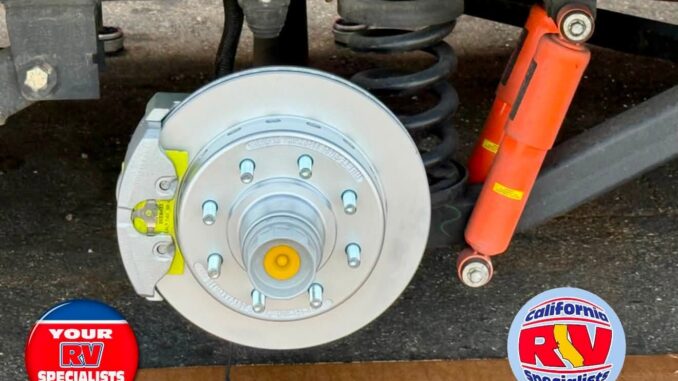
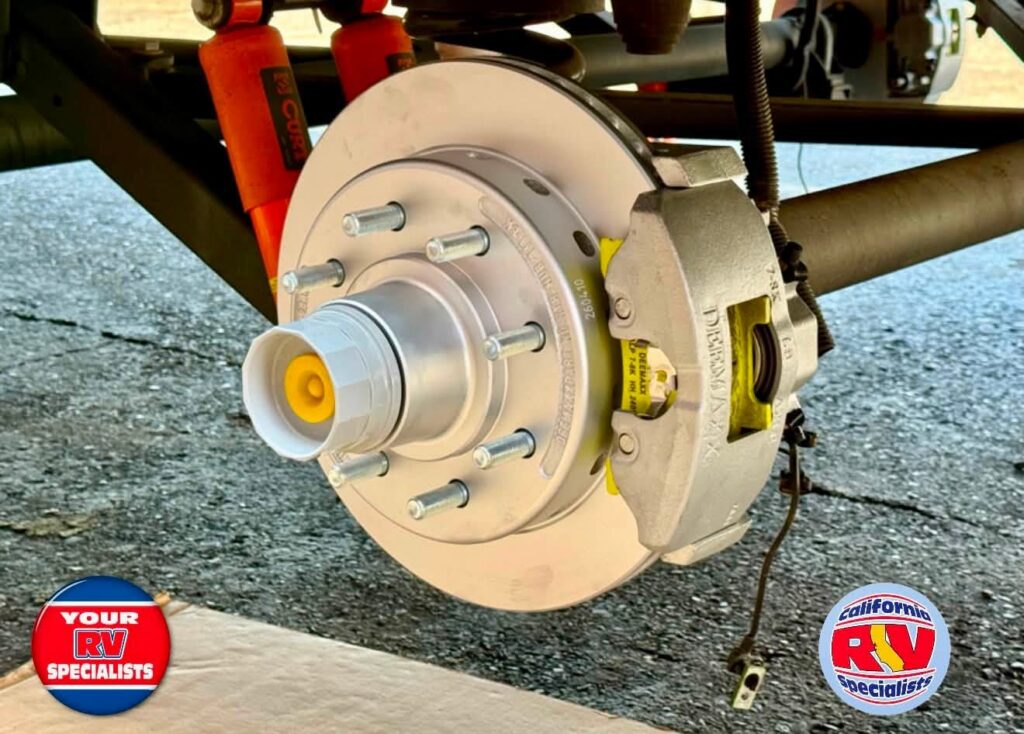
The DeeMaxx disc brake uses an electric-over-hydraulic braking system.
When you apply the brakes in the tow vehicle, an electric-over-hydraulic actuator creates hydraulic pressure. That pressure is sent through brake lines to the calipers, which squeeze the brake pads against the rotors.
The result is a braking system that operates more like the hydraulic disc brakes found on many passenger vehicles.
Braking Response & Consistency
One of the biggest reasons RV owners consider hydraulic disc brakes is the braking experience.
Properly functioning disc brakes can provide strong, smooth and consistent braking response, which can be especially noticeable when towing larger fifth wheels and travel trailers.
Electric drum brakes can also provide effective braking, but their performance can be affected by adjustment, wear and the condition of the internal brake components.
Brake Adjustment
Drum brakes require proper adjustment so the brake shoes maintain the correct relationship with the drum.
As components wear, adjustment can affect braking performance.
Disc brakes don’t use brake shoes or the same drum-style adjustment system. The caliper and brake pad design eliminates the traditional brake shoe adjustment associated with electric drum brakes.
Inspection & Maintenance
Both systems require maintenance.
With drum brakes, the drum typically needs to be removed to fully inspect the brake shoes, magnets, springs and internal hardware.
Disc brake pads, rotors and calipers are generally easier to visually inspect.
A DeeMaxx system still requires inspection of the pads, rotors, calipers, hydraulic lines, brake fluid, actuator and electrical components.
Disc brakes should never be considered maintenance-free.
Heat & Braking
Brakes create heat whenever they slow your RV.
Disc brake rotors are exposed to airflow, allowing them to dissipate heat differently than components enclosed inside a brake drum.
This is one reason hydraulic disc brakes are attractive to owners who tow heavier RVs or frequently travel through mountainous areas.
Regardless of the braking system, excessive braking and improper driving techniques can create excessive heat and component wear.
Different Wear Components
Electric drum brakes commonly contain brake shoes, magnets, springs, adjusters and related hardware.
A hydraulic disc brake system uses components such as brake pads, rotors, calipers, hydraulic lines and an electric-over-hydraulic actuator.
Neither system lasts forever. Routine inspection and maintenance remain important.
What About the Overall Towing Experience?
For many owners, upgrading isn’t simply about replacing worn brakes.
They want a trailer braking system that feels more responsive and predictable behind their tow vehicle.
This can be especially appealing for owners of large fifth wheels, toy haulers and heavier travel trailers.
Remember that better brakes don’t increase your tow vehicle’s rated capacity or eliminate the need for proper loading, good tires, adequate following distance and safe driving.
Is a DeeMaxx Disc Brake Upgrade Right for Your RV?
Not every RV owner needs to replace electric drum brakes with hydraulic disc brakes.
But if you own a larger towable RV, travel frequently, drive through mountainous terrain or are already considering major brake work, it may be worth discussing a DeeMaxx conversion.
Before making the upgrade, your RV’s axles, bearings, suspension, wheels and existing brake components should be inspected to determine the appropriate setup.
DeeMaxx Disc Brake Installation in Northern California
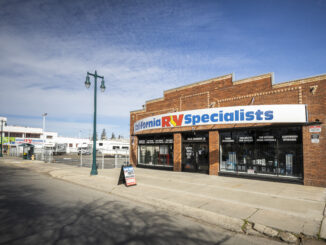
California RV Specialists LLC in Lodi provides professional DeeMaxx hydraulic disc brake conversions for fifth wheels and travel trailers.
We can inspect your existing running gear and help determine whether upgrading from electric drum brakes to hydraulic disc brakes is appropriate for your RV.
California RV Specialists LLC
200 S. Cherokee Lane
Lodi, CA 95240
209-263-7040
Whether you keep your electric drum brakes or upgrade to DeeMaxx disc brakes, proper inspection and maintenance are essential. The difference is in how the two systems operate—and the braking experience they can provide.