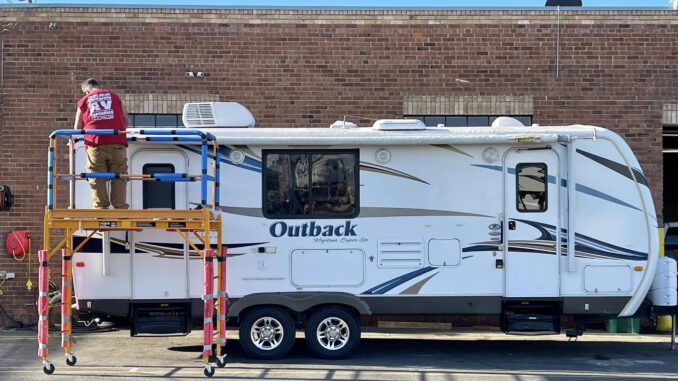
RV awnings are one of the most commonly used features on many RVs, but they are also one of the most overlooked when it comes to maintenance. Over time, dirt, moisture, road grime, and constant movement can cause awning components to become dry, noisy, stiff, or worn prematurely.
A little preventative maintenance and proper lubrication can help extend the life of your awning system and reduce the chance of expensive repairs down the road.

Common Areas That May Need Lubrication
Depending on the awning design and manufacturer, common lubrication points may include:
- Pivot points on awning arms
- Hinges and elbow joints
- Sliding arm channels
- Moving linkage assemblies
- Torsion or support arm pivot areas
- Manual awning locks and latches
- Adjustable pitch mechanisms
Keeping these areas lubricated helps the awning operate more smoothly and reduces unnecessary wear.
Why Lubrication Is Important
Proper lubrication can help:
- Reduce squeaking and binding
- Prevent corrosion
- Improve smooth operation
- Reduce stress on motors and gears
- Minimize wear on moving components
- Help prevent sticking or jerky movement
When components begin operating dry, additional strain can be placed on:
- Awning motors
- Arms and linkages
- Mounting hardware
- Fabric alignment
- Roller assemblies
Over time, neglected maintenance can contribute to bent arms, damaged motors, alignment issues, or premature component failure.
Use the Correct Lubricant
Not all lubricants are ideal for RV awnings.
Many RV technicians recommend:
- Dry silicone lubricants
- Teflon-based lubricants
- Non-staining spray lubricants
Avoid heavy grease or products that attract excessive dirt and debris, especially on exposed moving parts.
Always follow the awning manufacturer’s recommendations whenever possible.
Basic Awning Inspection Tips
While lubricating your awning, it’s also a good time to inspect:
- Loose hardware
- Fabric condition
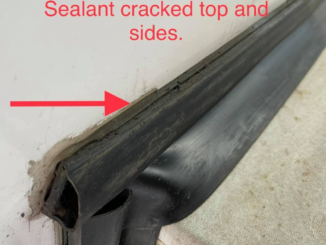
- Cracked sealants
- Bent arms
- Roller tube alignment
- Signs of corrosion
- Mounting brackets
Catching small problems early can help prevent larger repairs later.

Don’t Force a Binding Awning
If your awning is:
- Popping
- Binding
- Retracting unevenly
- Twisting
- Making grinding noises
simply spraying lubricant on it may not solve the issue.
Sometimes these symptoms indicate:
- Bent components
- Motor issues
- Alignment problems
- Fabric shifting
- Structural damage
If something does not seem right, it’s best to have the awning inspected before additional damage occurs.
Final Thoughts
RV awnings are exposed to constant weather, vibration, and movement. A small amount of routine maintenance can go a long way toward improving operation and extending the life of the system.
Keeping pivot points and moving components properly lubricated is one of the easiest preventative maintenance items RV owners can do.
A few minutes of maintenance today may help prevent expensive awning repairs tomorrow.
California RV Specialists
200 S. Cherokee Lane
Lodi, CA 95240
209-263-7040
www.calrvspecialists.com