Equa-Flex vs. MORryde CRE3000
By Dustin Simpson
RVtravel.com Contributor & Owner of California RV Specialists
I’m sharing this information because I genuinely do not want to see RV owners accidentally cause damage to their trailers by installing suspension components that are not properly matched to their existing suspension geometry.
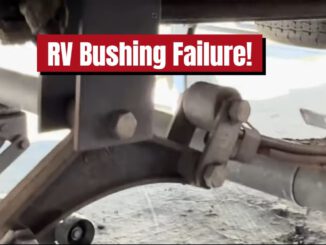
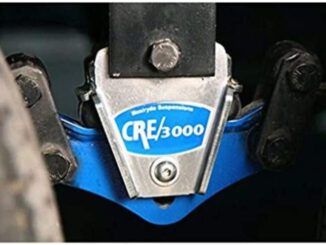
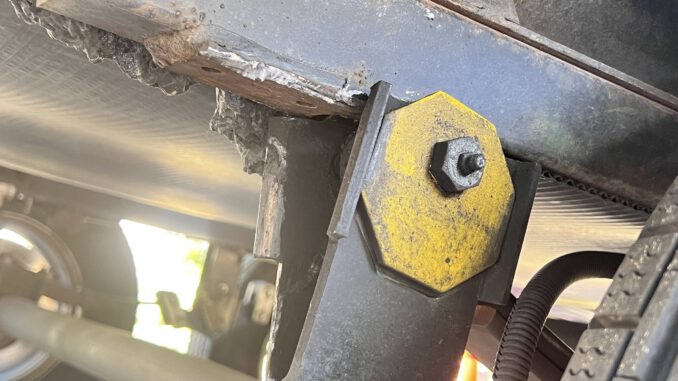
However, I saw an RV group post discussing replacing a Lippert Equa-Flex equalizer with a MORryde CRE3000. While both products are popular suspension upgrades, many owners do not realize they are not always direct replacements for one another simply because they physically bolt into place.
This is one of those situations where “it fits” does not necessarily mean “it’s correct.”


Equalizer Size Difference: Equa-Flex vs. MORryde CRE3000
When comparing the Lippert Components Equa-Flex equalizer to the MORryde CRE3000, the biggest difference is the overall equalizer length.
Typical dimensions are approximately:
Equa-Flex:
Typically around 5.5” to 6.0” center bolt to center bolt
MORryde CRE3000:
Typically around 6.5” to 7.5” depending on the model
That means the CRE3000 is commonly about 1” to 1.5” longer than many factory-installed Equa-Flex systems.
At first glance, that may not seem like a major difference, but within suspension geometry, that small change can significantly affect how the suspension system functions.
Why Equalizer Length Matters
Your RV suspension system was designed around very specific axle spacing, hanger positioning, and shackle angles. Changing one component length without evaluating the rest of the suspension can create unintended problems.

Axle Spacing Changes
The equalizer sits between the leaf springs and directly affects axle positioning.
Installing a longer equalizer pushes the axles farther apart than originally designed. This changes:
- Suspension geometry
- Weight distribution
- Axle positioning
- Overall towing characteristics
Even small changes in axle spacing can affect how the trailer handles on the road.
Shackle Angle Changes
Suspension shackles are designed to sit at a slight angle to allow proper suspension movement throughout travel.
When a longer equalizer is installed:
- Shackles may become too vertical
- Shackles may angle improperly
- Suspension travel can become restricted
- Component stress increases
Improper shackle angles can place additional strain on:
- Equalizers
- Hangers
- Wet bolts
- Bushings
- Springs
Over time, this may contribute to accelerated wear or even suspension failure.


Suspension Travel Can Be Compromised
The MORryde CRE3000 is designed to improve ride quality by allowing additional suspension movement and shock absorption.
However, if the suspension geometry is incorrect:
- The equalizer may not cycle correctly
- Movement may become restricted
- Suspension articulation may become uneven
Instead of improving ride quality, performance may actually decrease.
Tire Position and Tire Wear Can Change
Altering equalizer length can slightly reposition the axles and tires.
This can potentially lead to:
- Uneven tire wear
- Tire scrub
- Clearance issues between tires
- Wheel well interference
- Alignment concerns
We have seen cases where owners unknowingly created additional tire wear problems after installing suspension parts that changed the intended geometry.
Increased Stress on the Frame and Hangers
Your suspension system transfers load into the RV frame through the spring hangers.
Changing equalizer dimensions changes how forces are distributed through:
- Frame hangers
- Crossmembers
- I-beams
- Welded mounting points
Over time, improper geometry may contribute to:
- Hanger fatigue
- Cracked welds
- Frame flex
- Structural stress
At California RV Specialists, we routinely inspect and repair suspension systems that have experienced these types of issues.
Important Takeaway
Even though a MORryde CRE3000 may physically bolt into place, it is not always a direct replacement for a factory-installed Equa-Flex equalizer.
Proper suspension performance depends on maintaining:
- Correct equalizer length
- Proper shackle angle
- Proper axle spacing
- Proper suspension geometry
If those measurements change, the suspension system may no longer function as intended.
When Suspension Changes Can Work Properly
This does not mean upgrading to a different equalizer system is bad.
In many cases, systems like the MORryde CRE3000 can absolutely improve ride quality and suspension performance — but only when the suspension system is evaluated as a complete package.
Proper installation may require:
- Verifying hanger spacing
- Adjusting shackle length
- Checking ride height
- Confirming axle alignment
- Inspecting spring geometry
- Evaluating frame and hanger condition
That’s why suspension upgrades should be approached carefully instead of simply swapping parts based solely on bolt pattern or physical fitment.
Final Thoughts
Towable RV suspension systems are often far more sensitive than many owners realize. Small dimensional changes can have a large impact on:
- Ride quality
- Tire life
- Suspension wear
- Towing stability
- Structural integrity
This is one of the most common examples where a component may “fit,” but still not be the correct solution for that specific trailer setup.
If you are considering suspension upgrades, it is important to evaluate the entire system — not just the individual part being replaced.
Written By:
Dustin Simpson
RVtravel.com Contributor
Owner of California RV Specialists
California RV Specialists
200 S. Cherokee Lane
Lodi, CA 95240
209-263-7040
www.calrvspecialists.com