Protect Your RV From Costly Suspension, Axle & Frame Problems
Your RV’s frame, suspension, axles, wheel bearings, and braking systems are critical to safe towing, structural integrity, and long-term reliability.
At California RV Specialists in Lodi, California, we provide professional RV frame inspections, suspension repairs, axle diagnostics, brake system service, and suspension upgrades for travel trailers, fifth wheels, toy haulers, and other towable RVs.
Whether you are experiencing unusual tire wear, ride concerns, suspension noise, or signs of frame stress, our team can help diagnose issues early and recommend practical repair or upgrade solutions.
Routine maintenance and inspections are one of the best ways to prevent expensive failures before they happen.
Call 209-263-7040 to schedule an inspection.
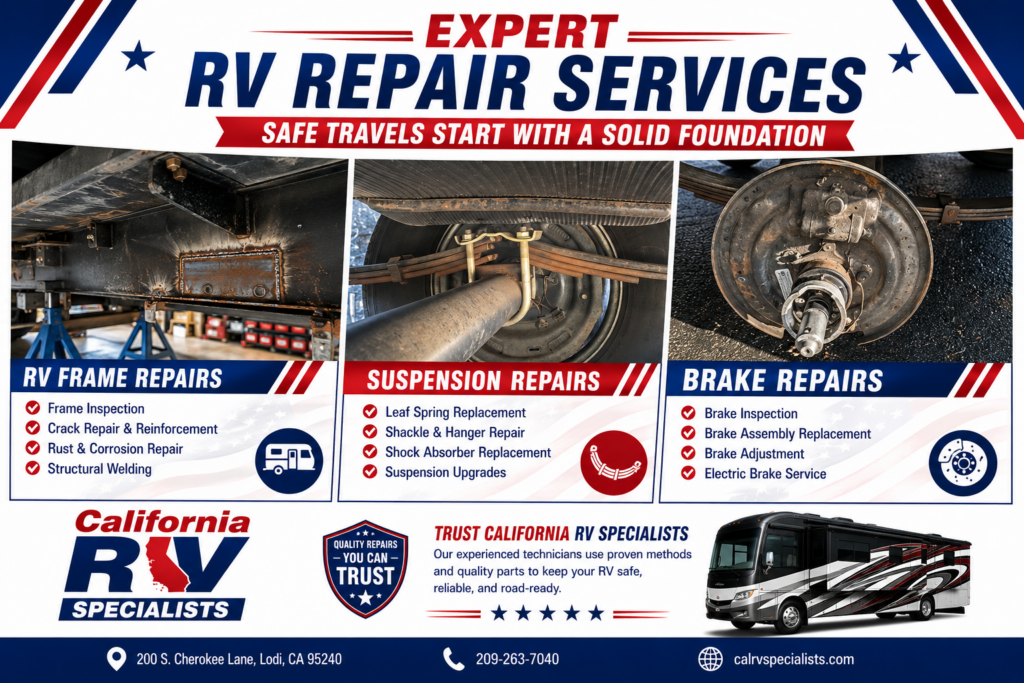
SIGNS YOUR RV MAY NEED A SUSPENSION OR FRAME INSPECTION
If you have noticed any of the following, it may be time for an inspection:
- Uneven or accelerated tire wear
- Excessive bouncing or porpoising
- Suspension squeaks, clunks, or noise
- Trailer pulling or tracking poorly
- Leaning or ride height concerns
- Visible frame stress or cracking
- Brake performance concerns
- Signs of worn leaf springs or suspension components
Small issues can often turn into expensive repairs if left unaddressed.
RV FRAME, AXLE & SUSPENSION SERVICES
We provide services including:
- Frame and structural inspections
- Suspension diagnostics and repairs
- Leaf spring inspections and replacement
- Axle inspections and ride height evaluations
- Brake system inspections and repairs
- Wheel bearing service
- Tire wear diagnosis
- Suspension component replacement
- Preventive chassis maintenance
We can help identify wear, damage, and alignment-related issues before they become larger problems.
REPAIR OR UPGRADE — WE HELP YOU EVALUATE BOTH
Sometimes the best solution is repair.
Sometimes an upgrade may dramatically improve towing stability, ride quality, and long-term durability.
We also install suspension upgrades such as:
- Roadmaster Comfort Ride Systems
- Wet Bolt and Equalizer Upgrades
- Leaf Spring Upgrades
- U-Bolt Hardware Upgrades
- Ride Control and Suspension Improvement Systems
We can help you determine whether repair or upgrade makes the most sense for your RV.
COMMON CAUSES OF SUSPENSION & FRAME PROBLEMS
Suspension and structural concerns may develop from:
- Overloading
- Towing out of level
- Road impacts or curb strikes
- Worn suspension components
- Poor road conditions
- Normal wear and tear
- Inadequate preventive maintenance
Early inspection can often help prevent secondary damage.
WHY PREVENTIVE MAINTENANCE MATTERS
Routine maintenance is one of the best ways to protect your RV’s chassis components and avoid unexpected failures.
We generally recommend suspension inspections:
- At least annually
- Approximately every 10,000 miles
- During routine wheel bearing and brake service
- Anytime unusual tire wear or handling concerns appear
Preventive maintenance can often help catch issues before they become expensive repairs.
FREQUENTLY ASKED QUESTIONS
How often should RV suspension be inspected?
At least once per year or approximately every 10,000 miles.
Can RV axles bend?
Yes. Axles can bend from overloading, towing out of level, or impacts with curbs or road hazards.
Can suspension upgrades improve towing stability?
Yes. In many cases the right upgrades can improve ride quality, reduce vibration, and help protect both the RV and its contents.
What causes uneven trailer tire wear?
Uneven tire wear may be caused by suspension wear, alignment concerns, loading issues, axle problems, or towing geometry.
EXPERIENCED FRAME & SUSPENSION DIAGNOSTICS
We routinely inspect:
- Frame crack concerns
- Spring and equalizer wear
- Brake and bearing issues
- Axle alignment concerns
- Tire wear patterns
- Ride height and towing geometry
We take pride in helping RV owners better understand what they are seeing and what their options may be.
SERVING RV OWNERS ACROSS NORTHERN CALIFORNIA
California RV Specialists proudly serves customers from:
Lodi • Stockton • Sacramento • Modesto • Elk Grove • Galt • Manteca • Tracy • Napa • Vacaville • Fairfield • Davis • Woodland
…and surrounding communities throughout Northern California.
Many customers travel significant distances for inspections, suspension upgrades, and specialized repair work.
DON’T WAIT FOR SMALL SUSPENSION PROBLEMS TO BECOME MAJOR REPAIRS
If you’ve noticed unusual tire wear, suspension noise, handling concerns, or possible signs of frame stress, now is the time to have your RV inspected.
Early diagnosis can often prevent larger, more expensive repairs later.
Call 209-263-7040 today to schedule your RV frame and suspension inspection.
California RV Specialists
200 S. Cherokee Lane
Lodi, CA 95240
Phone: 209-263-7040
Email: service@calrvspecialists.com
Learn More
Be sure to check out our YouTube channel and social media pages for suspension education, product insights, and real-world RV repair information.
We believe informed RV owners make better maintenance and upgrade decisions.

How Common Are RV Accidents?
According to the National Highway Traffic Safety Administration (NHTSA), approximately 76,000 RV accidents occur each year.
Many of these incidents can be traced back to issues that could have been prevented with proper maintenance, inspections, and safe towing practices.
Towable RV Suspension – The Overlooked Essential
The suspension system on a travel trailer or fifth wheel is one of the most commonly overlooked components—until something goes wrong. Yet, it plays a critical role in your RV’s performance and safety.
Your towable RV’s suspension is designed to absorb road shock, keep the trailer level, provide a smoother ride, and reduce stress on your tires, frame, and interior. When suspension components wear out, the ride quality may not feel drastically different from the driver’s seat—but inside the unit, everything is shaking, bouncing, and shifting, often without your awareness.
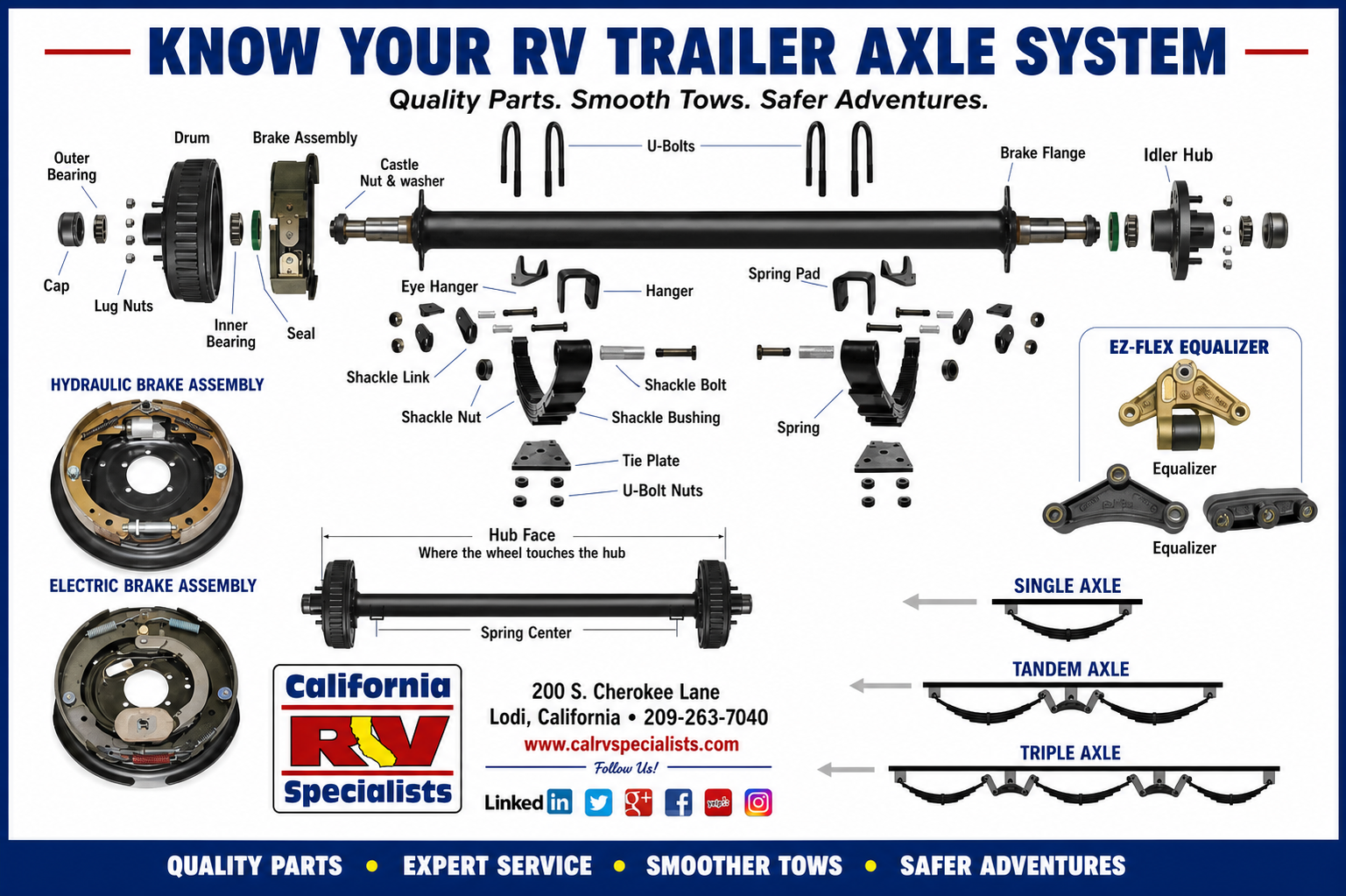
Know Your Suspension: 7 Key Components
There are seven main components you should be aware of when it comes to RV suspension. These components can vary depending on the number of axles on your unit—single, dual, or triple axle. The good news is, in most cases, these parts are visible and easy to inspect before hitting the road.
Regularly checking your suspension system is a simple step that can prevent costly damage, ensure safer travel, and extend the life of your RV.
Breakdown sheet examples.
Axle Issues – What You Need to Know
RV and trailer axles can bend for several reasons, most commonly due to overloading. This can result from carrying excessive weight or towing your trailer out of level, which places uneven stress on the axles and suspension system.
Surprisingly, axles can also bend from minor impacts. Something as simple as hitting a curb can cause damage, especially on lighter-weight frames. In other cases, minor collisions or hitting road debris can lead to alignment issues or structural bending.
If you’ve recently been in an accident, hit an object in the road, or even just bumped a curb, it’s important to visually inspect your axles. Always take the time to crawl under your trailer and check for signs of damage, such as misalignment, visible bending, or abnormal tire wear.


Tire Wear – Don’t Ignore the Warning Signs
Your safety—and the safety of those behind you—is our top priority. If you notice your tires are worn down or showing abnormal wear patterns, don’t wait.
Contact your local dealer or repair shop immediately to have them inspected and replaced if necessary.
Proper tire maintenance is crucial for safe towing and preventing accidents on the road.


Suspension Inspection
The main components of towable suspension are:
- Hangers
- Leaf springs
- Equalizers
- Shackle links
- Shackle bolts and bushings
- U-Bolts/U-bolt tie plates
- Spring pads
- Axles beams
Frame Hanger Problems
The leaf spring hanger plays a crucial role by securely attaching the leaf spring to your RV’s frame. However, these hangers can experience issues such as improper welds, rust, cracks, or even breakage that causes them to detach from the frame.
Many manufacturers do not reinforce the hangers or I-beams adequately, which often leads to hanger failures. Regular inspection of these components is essential to catch any problems early and prevent potential safety hazards or costly damage.


Leaf Springs Problems
Leaf springs provide essential cushioning for your travel trailer, absorbing bumps and vibrations to ensure a smoother ride. However, leaf springs are not one-size-fits-all—different trailers require specific types and sizes to perform correctly.
Over time, leaf springs can become broken, cracked, or weakened. Factors such as rough roads, manufacturing quality, and added weight can all contribute to spring failure. Regular inspection and proper maintenance are key to preventing unexpected breakdowns and maintaining safe, comfortable towing.


New Unit Suspension Mistakes
Sometimes, we come across unexpected issues—like mismatched leaf springs on a brand new 2020 Grand Design Reflection. On this unit, we found a four-leaf spring on the front axle and a five-leaf spring on the rear axle—an unusual setup that can affect ride quality and safety.
It’s a great reminder to always inspect your suspension carefully, even on new RVs!


Equalizers Problems
Equalizer bars are an important component on tandem and triple axle trailer suspensions. They help absorb road shock and distribute the load evenly between axles, creating a smoother and safer ride.
When equalizers become worn, they can cause issues such as excessive noise, axle misalignment, and suspension walk, all of which can affect towing stability and safety. Regular inspection and maintenance of equalizer bars are essential to keep your trailer performing at its best.
Different examples of equalizers.

Equalizers can become broken, cracked, or worn over time. If your unit still uses these older components, you’re essentially driving on 1950s-era technology. Fortunately, there are many modern, enhanced products available today that can significantly improve your ride quality, stability, and overall towing experience.
Upgrading your suspension components can make a world of difference—bringing smoother handling and greater safety to your travels.


Shackle Links, Bolts and Bushings Problems
Shackle links, also known as shackle straps, connect the suspension springs to the axle hangers. Since leaf springs alone can’t handle all the movement, shackles allow the suspension system to flex properly and function smoothly.
Shackle bolts secure your trailer’s leaf springs in place, while bushings—found in both leaf springs and equalizers—act as cushions that absorb shocks and help provide a smoother ride.


Frame Cracks – A Serious Safety Concern
The presence of frame cracks in a towable RV is a critical issue that demands immediate attention. Cracks can weaken the structural integrity of your RV, creating potential safety hazards and increasing the risk of further damage.
If you suspect or notice any frame cracks, it’s essential to have your RV inspected and repaired promptly to ensure safe and reliable travel.


U-Bolts/U-Bolt Tie Plates Problems
Drive axle U-bolts are critical components that attach the axle to the vehicle’s frame through the leaf springs. They play a vital role in holding the suspension system together.
Over time, U-bolts can rust, weaken, or break, often due to other suspension issues or exposure to the elements. A damaged or broken U-bolt compromises the safety and stability of your RV, so regular inspection and timely replacement are essential.


Trailer Axle Spring Pads (Perches)
Trailer axle spring pads, also known as perches, are welded to the axle tube and provide the mounting points for the leaf springs. These components are crucial for ensuring the wheels stay properly aligned and for supporting the weight of the vehicle.
The size, type, and number of axles play a major role in determining the trailer’s load capacity and how much weight it can safely handle.


Axle Flip Examples
Flipping the axles on a travel trailer or fifth wheel can provide better ground clearance, helping to prevent scraping and protect the components located underneath your trailer. This modification is especially useful for rough or uneven terrain.
For specific details and guidance, be sure to consult your axle manufacturer before proceeding.


Wheel Bearing Problems
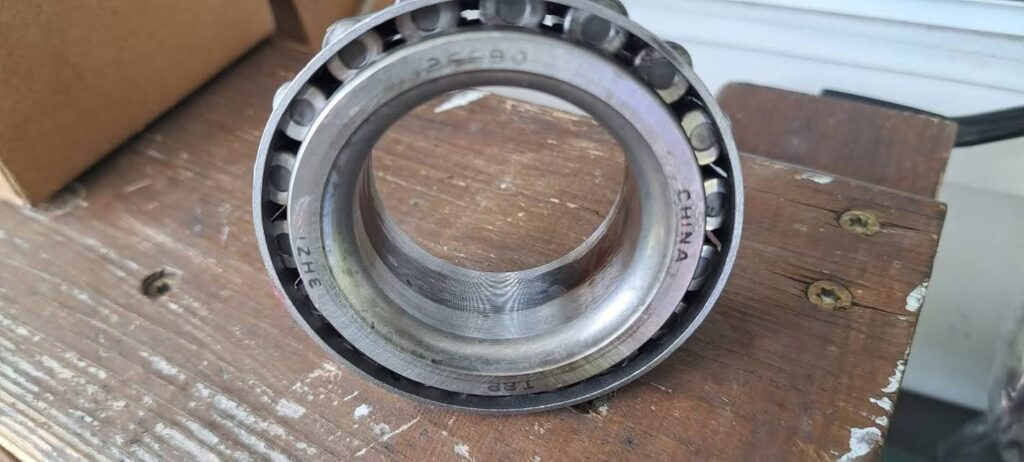
Wheel bearings are one of the most critical safety components on your RV. They allow the wheels and hubs to rotate smoothly while supporting thousands of pounds of weight during travel. Proper lubrication, adjustment, and regular inspection are essential to prevent premature wear and costly failures.
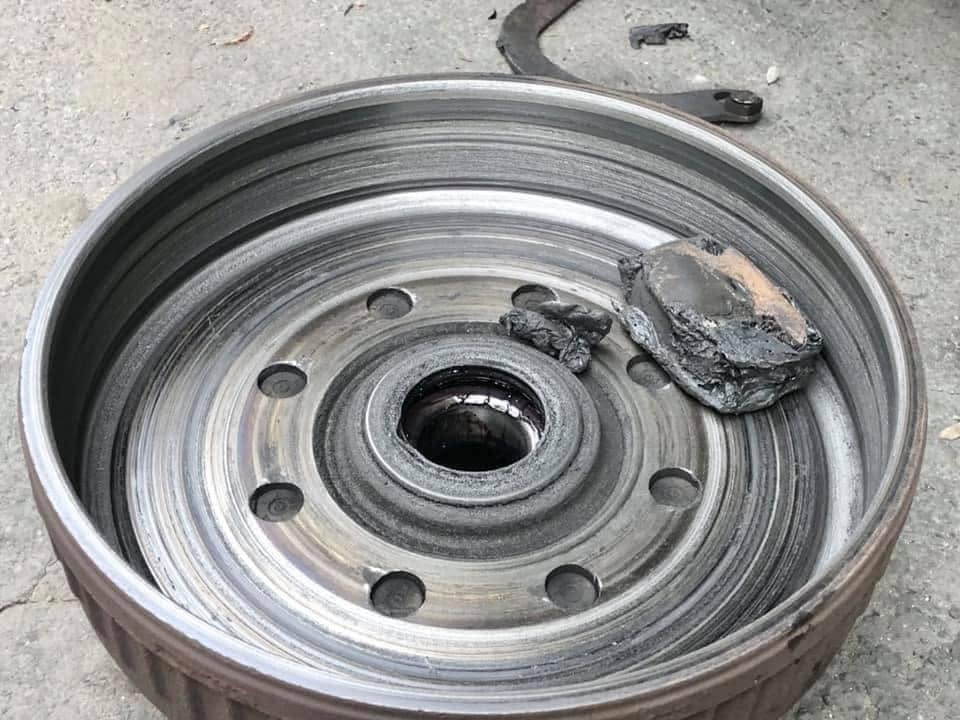
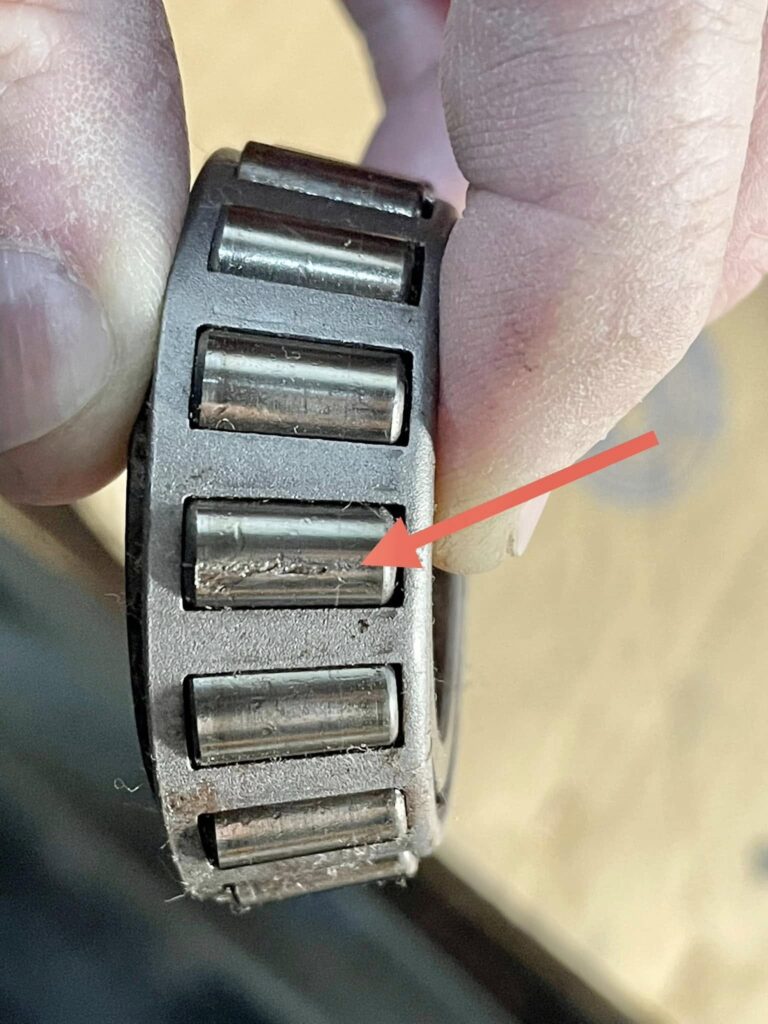
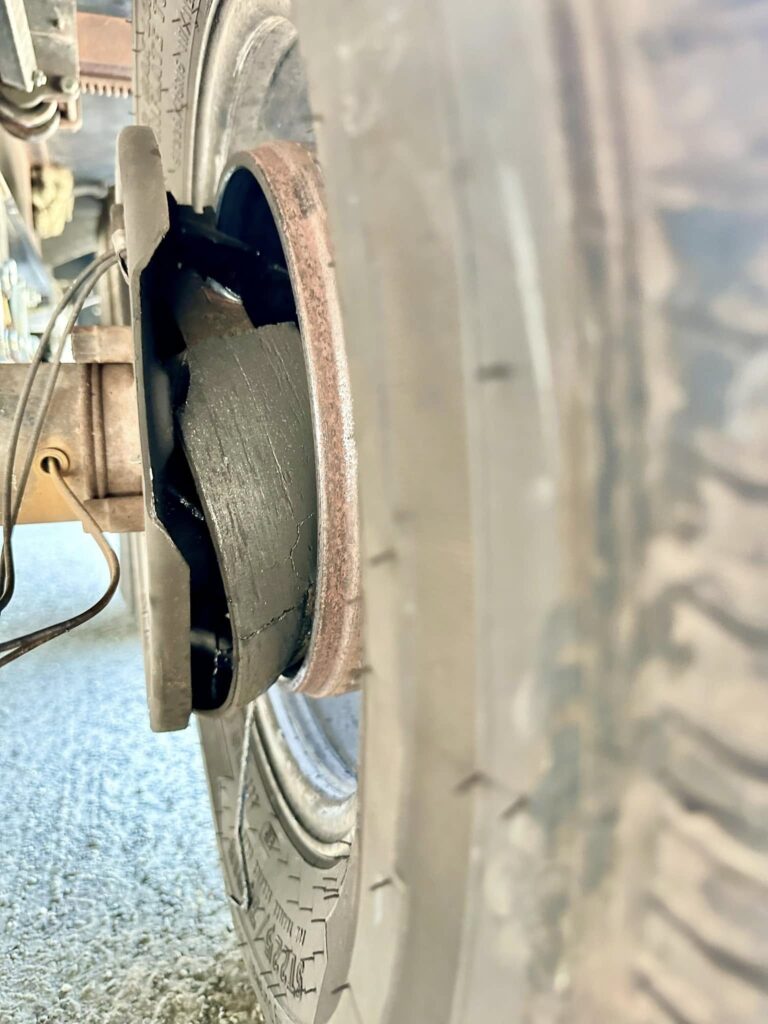
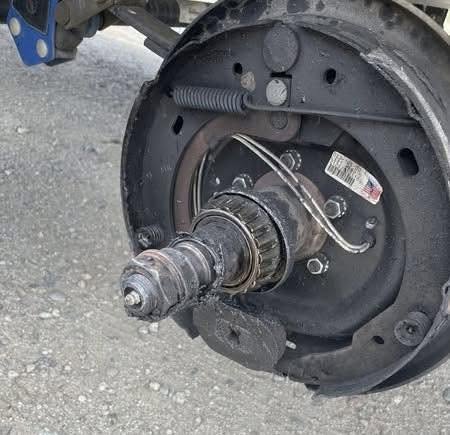
When wheel bearings begin to fail, they can cause excessive heat, grease leakage, abnormal tire wear, noisy operation, brake damage, and spindle damage. If ignored, a failed bearing can allow the wheel and hub assembly to separate from the axle, creating a serious safety hazard.
Common Signs of Wheel Bearing Failure
- Burnt or discolored bearings and races
- Blue or black heat marks on the spindle
- Grease leaking from the hub or brake backing plate
- Grinding, humming, or growling noises while towing
- Loose wheel or excessive hub play
- Overheated hubs after driving
- Damaged grease seals
- Metal shavings inside the hub
- Scored or damaged bearing races
- Brake shoes contaminated with grease
Common Causes
- Lack of lubrication
- Incorrect bearing adjustment
- Water intrusion
- Worn or damaged grease seals
- Overloaded trailer
- Long service intervals
- Poor-quality or contaminated grease
- Bearing fatigue from high mileage or age
Why Immediate Repairs Matter
A worn wheel bearing rarely fixes itself—it continues to deteriorate with every mile traveled. Catching a failing bearing early may only require replacing the bearings, races, and seals. Waiting too long can damage the axle spindle, brakes, hub assembly, and even result in complete wheel separation, significantly increasing repair costs and creating a dangerous situation on the road.

The Proper Way to Burnish your Trailer Brakes
Make sure you check out our YouTube channel for more helpful information, and other social media pages.
Can’t Bring Your RV to the Shop?
If you’re unable to bring your unit in for maintenance or repairs — or if you’re looking to tackle an upgrade as a DIY project — we’ve got you covered!
Visit our Amazon Store for everything you’ll need, including basic parts, accessories, and tools to help you maintain your RV.