By Dustin Simpson | California RV Specialists
One of the biggest mistakes I see RV owners make is knowing they have a problem—and then continuing to use their RV for weeks or even months without addressing it.
Whether your RV is covered under the manufacturer’s warranty, an insurance policy, an extended service contract, or you’re paying for the repair yourself, the first priority should always be the same:
Get the problem diagnosed and repaired.
Determining who is responsible for paying for the repair is important, but preventing additional damage should come first.
Your RV Shouldn’t Be Treated Differently Than Your Home
Think about your house for a moment.
If your water heater stopped working, a plumbing pipe began leaking, your sewer line backed up, your electrical system developed a problem, or your air conditioner quit cooling, would you simply wait a month hoping the problem fixed itself?
Probably not.
Most homeowners would immediately call a qualified professional to inspect the issue and begin repairs before additional damage occurred.
Your RV deserves the same level of attention.
Unfortunately, we regularly hear statements like:
- “It’s been leaking for about a month.”
- “The slide has been making that noise for a while.”
- “The brakes have been acting funny since our last trip.”
- “We’ve just been living with it.”
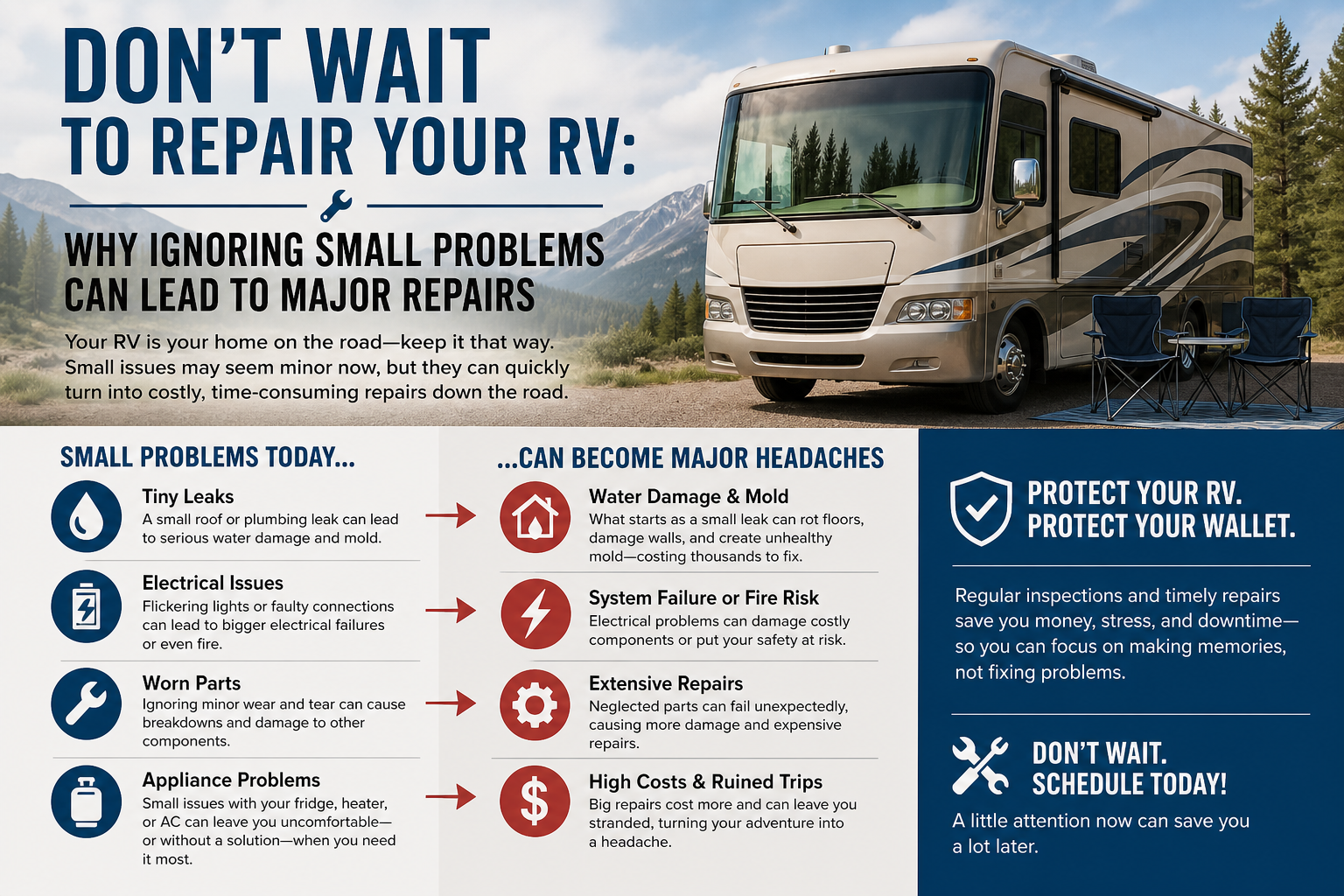
While it’s understandable that schedules get busy or owners hope the issue isn’t serious, delaying repairs often allows minor problems to become major ones.
An RV Lives a Much Harder Life Than a House
One of the biggest differences between a home and an RV is movement.
A house sits on a permanent foundation.
An RV experiences constant:
- Vibration
- Flexing
- Twisting
- Bouncing
- Road shock
- Temperature changes
- Wind loads
- Weather exposure
Every mile you drive or tow your RV is similar to putting your home through a small earthquake.
That constant movement places stress on virtually every system inside the coach.
Fasteners loosen.
Sealants move.
Suspension components wear.
Electrical connections vibrate.
Plumbing fittings flex.
Cabinets shift.
Roof components expand and contract.
Even when everything is functioning correctly, these forces gradually wear on your RV over time.
Small Problems Rarely Stay Small
Many expensive RV repairs begin with something relatively minor.
Examples include:
- A small roof sealant crack becomes extensive water damage.
- A leaking plumbing fitting saturates flooring and cabinetry.
- A worn suspension component causes uneven tire wear and frame stress.
- A noisy wheel bearing eventually overheats and damages the axle spindle.
- A sticking brake assembly damages the brake drum and hub.
- A slide-out adjustment issue causes floor damage or water intrusion.
- A loose electrical connection creates heat and damages surrounding components.
The earlier these issues are identified, the easier—and often less expensive—they are to repair.
Regular Inspections Are Part of RV Ownership
Unlike many passenger vehicles, RVs contain nearly every major system found in a home while also functioning as a vehicle.
That means routine maintenance should become part of every owner’s travel routine.
Depending on how often you use your RV, certain components should be inspected:
Before Every Trip
- Tires and tire pressure
- Exterior lights
- Hitch components
- Safety chains and breakaway cable
- Wheel lug torque (when applicable)
- Slide-outs
- Awnings
Monthly
- Roof and sealants
- Battery condition
- Plumbing connections
- Water system
- Appliance operation
- Electrical connections
- Exterior seals
Seasonally
- Suspension components
- Brakes
- Wheel bearings (per manufacturer recommendations)
- Air conditioners
- Furnaces
- Water heaters
- Slide mechanisms
Annually
- Complete roof inspection
- Safety inspection
- Suspension evaluation
- Brake inspection
- Sealant evaluation
- Appliance service as recommended by the manufacturer
Preventative maintenance is almost always less expensive than repairing damage after a failure occurs.
Even Park Model RVs Need Maintenance
Many owners believe that because their RV stays in one location, maintenance isn’t as important.
In reality, stationary RVs continue to age every single day.
Weather, UV exposure, moisture, temperature changes, and normal material aging continue whether the RV moves or not.
Sealants dry out.
Rubber components age.
Plastic becomes brittle.
Water intrusion can occur without ever towing the RV.
No RV is maintenance-free.
Diagnose First—Determine Payment Second
One recommendation I often give RV owners is this:
Don’t spend weeks trying to determine whether the repair will be covered before having the problem inspected.
Instead:
- Have the RV evaluated by a qualified repair shop, dealership, or certified mobile RV technician.
- Identify the cause of the problem.
- Determine whether it may qualify under the manufacturer’s warranty, an extended service contract, an insurance claim, or owner maintenance.
- Begin repairs before additional damage develops.
In many cases, delaying repairs while waiting for coverage decisions can actually increase the amount of damage that occurs.
Our Experience
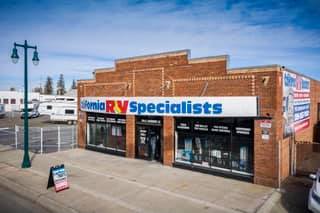
Since 2003, California RV Specialists has helped approximately 1,200 to 1,500 RV owners every year.
After inspecting and repairing thousands of RVs, one pattern has remained remarkably consistent:
Many of the largest and most expensive repairs started as small problems that were simply ignored for too long.
Our goal isn’t to scare RV owners—it’s to encourage preventative maintenance and early diagnosis.
Final Thoughts
Every RV will require maintenance.
Every RV will eventually need repairs.
The difference between a minor repair and a major reconstruction often comes down to how quickly the issue is identified and addressed.
If your RV is making an unusual noise, showing signs of a leak, experiencing electrical problems, developing suspension issues, or simply doesn’t seem right, don’t ignore it.
Have it inspected.
A proactive inspection today may save thousands of dollars tomorrow.
At California RV Specialists, we believe that helping RV owners understand their coach is just as important as repairing it. Our mission has always been to educate owners, provide honest assessments, and help keep RVs safe and ready for the road.
California RV Specialists
200 S. Cherokee Lane
Lodi, CA 95240
Phone: 209-263-7040
Website: www.calrvspecialists.com
Serving RV owners with professional repairs and inspections since 2003.
Contact us to schedule a appointment today!
- Office Phone: 209-263-7040
- Hours of operation:
- 8 am to 4 pm Monday-Friday; Closed Saturday & Sunday
- Closed for lunch 12 pm – 1 pm
- Address: 200 S. Cherokee Lane, Lodi, CA 95240
Make sure you check out our YouTube channel for more helpful information, and other social media pages.