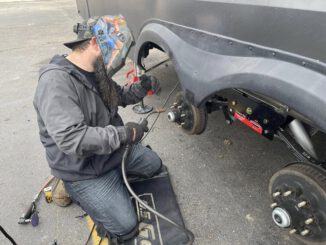
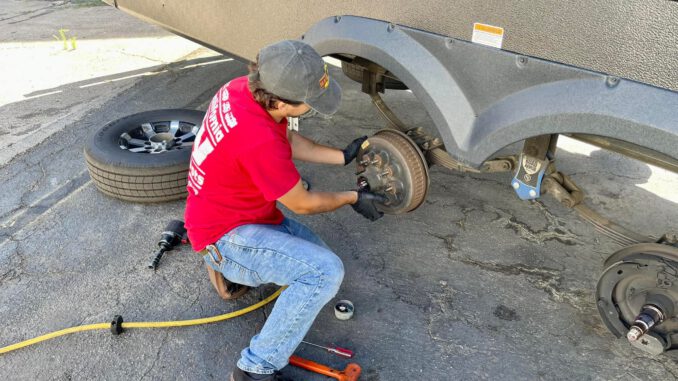
At California RV Specialists, one of the most common questions we receive after brake service or replacement is why trailer brakes do not feel as strong immediately after installation.
The answer is straightforward. RV trailer brakes must go through a process called burnishing, also known as brake break-in, to reach full performance.
What Is Brake Burnishing?
Burnishing is the controlled process of seating the brake shoes and electromagnets evenly against the brake drum surface.
When brake components are new, serviced, or adjusted, the contact surfaces are not perfectly matched. Burnishing allows:
- Full contact between brake shoes and drum
- Even transfer of friction material
- Proper heat cycling of brake components
- Improved braking consistency and performance
Without proper burnishing, braking performance may feel reduced or inconsistent.
When Should You Burnish RV Trailer Brakes?
Burnishing should be performed under the following conditions:
- After installing new brake assemblies
- After replacing brake shoes or magnets
- After axle replacement
- After major brake service or adjustment
- After bearing service when brake components have been disturbed
Recommended Burnishing Procedure
California RV Specialists recommends following a manufacturer-supported procedure similar to those outlined by Lippert Components.
Step-by-Step Instructions
- Locate a safe, low-traffic road
- Set your brake controller output to approximately 8–10 volts
- Accelerate to about 40 MPH
- Use the manual override on your brake controller only
- Apply trailer brakes to slow to 20–25 MPH
- Release the brakes and continue driving
- Repeat this process every mile
Perform approximately 20 to 50 brake applications.
This method allows the trailer brakes to perform the work independently, which helps seat the components properly and efficiently.

What to Expect During Burnishing
During the process, the following conditions are normal:
- Gradual improvement in braking performance
- Light odor from brake components as they heat cycle
- Increasing responsiveness with each application
Brake temperatures may rise significantly during this process, which is necessary to properly condition the friction materials.
Break-In Period After Burnishing
Even after completing the burnishing procedure, your brakes will continue to improve during normal use.
- Typical break-in range: 50 to 200 miles
- Braking performance will continue to increase over time
- Self-adjusting brakes will fine-tune clearance during operation
It is normal for braking to feel slightly less aggressive immediately after service and improve gradually.
Brake Controller Adjustment After Burnishing
Once burnishing is complete, it is important to verify your brake controller settings.
Recommended Process
- Begin with your previous gain setting
- Perform a low-speed test at 20–25 MPH
- Adjust incrementally:
- Increase gain if braking feels weak
- Decrease gain if braking is too aggressive
As braking performance improves over time, additional fine-tuning may be necessary.

Consequences of Skipping Burnishing
Failure to properly burnish trailer brakes can result in:
- Reduced stopping power
- Uneven brake wear
- Glazing of brake shoes
- Increased stopping distances
- Premature brake component failure
Burnishing is a critical step in ensuring safe and effective braking performance.
California RV Specialists Recommendation
California RV Specialists recommends that all RV owners complete the burnishing process after any brake service or replacement.
Properly burnished brakes provide:
- Improved stopping performance
- Longer component lifespan
- More consistent and predictable braking
If you experience abnormal braking behavior beyond the normal break-in period, professional inspection is recommended.
Schedule an RV Suspension Inspection
If you’re unsure about the condition of your suspension system, it’s worth having it checked before your next trip.
California RV Specialists offers professional suspension inspections and repairs to help keep your RV safe and road-ready.
California RV Specialists
200 S Cherokee Lane
Lodi, CA 95240
Phone: (209) 263-7040
Email: service@calrvspecialists.com
Contact us today for expert RV suspension service and repairs.