By Dustin Simpson | California RV Specialists
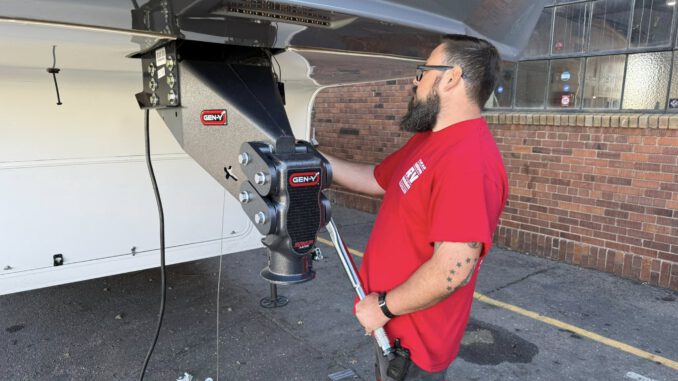
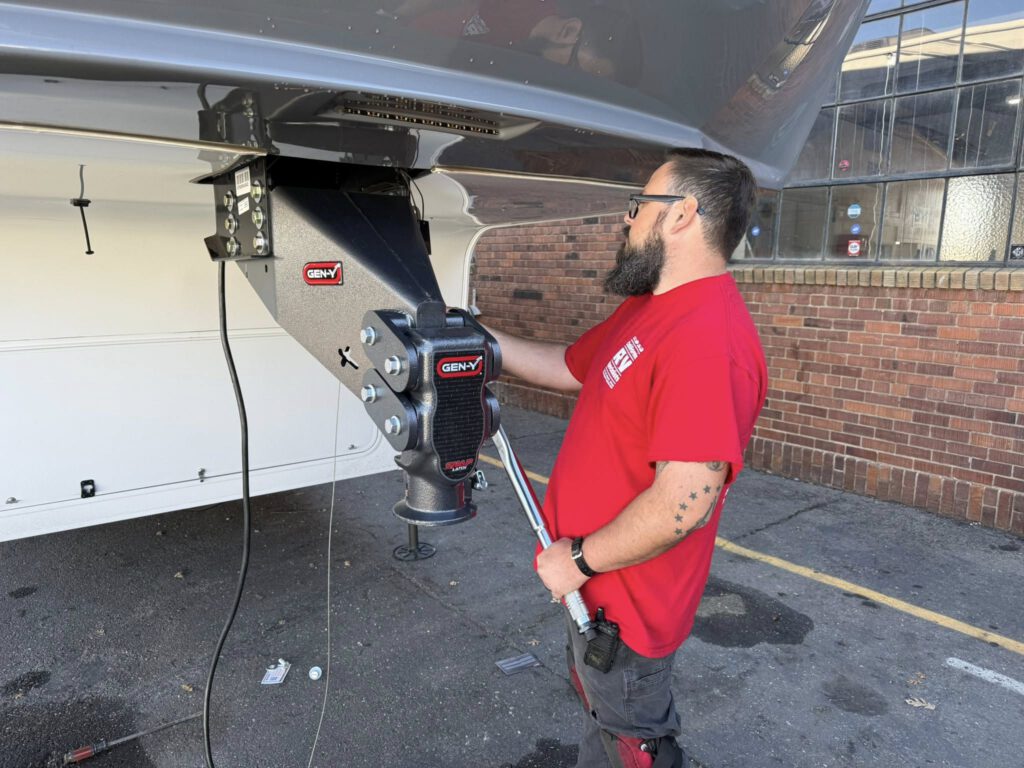
Proper fifth wheel maintenance is critical to safe towing, especially when it comes to the pin box assembly, which carries the full weight transfer between your RV and tow vehicle. RV manufacturers strongly recommend regular, detailed inspections of the pin box—particularly before long trips or at the start of each towing season.
At California RV Specialists, we routinely see preventable failures caused by loose hardware, frame fatigue, and overlooked inspection points. A few minutes of inspection can prevent serious structural damage and unsafe towing conditions.
Why Pin Box Inspections Matter
Your pin box is one of the most heavily stressed components on a fifth wheel RV. It constantly absorbs:
- Road shock and vibration
- Acceleration and braking forces
- Turning and twisting loads
- Vertical load transfer from trailer to truck
If mounting hardware or structural components begin to fail, the results can include frame damage, unsafe towing behavior, or in extreme cases, separation risk.
Key Pin Box Inspection Checklist
1. Check Bolt Torque
Regularly inspect all mounting bolts securing the pin box to the RV frame.
- Ensure bolts are properly torqued to manufacturer specifications
- Look for any signs of loosening or shifting
- Re-torque as needed using a calibrated torque wrench
Loose hardware is one of the earliest and most common failure points.
2. Inspect for Cracks, Weld Damage & Rust
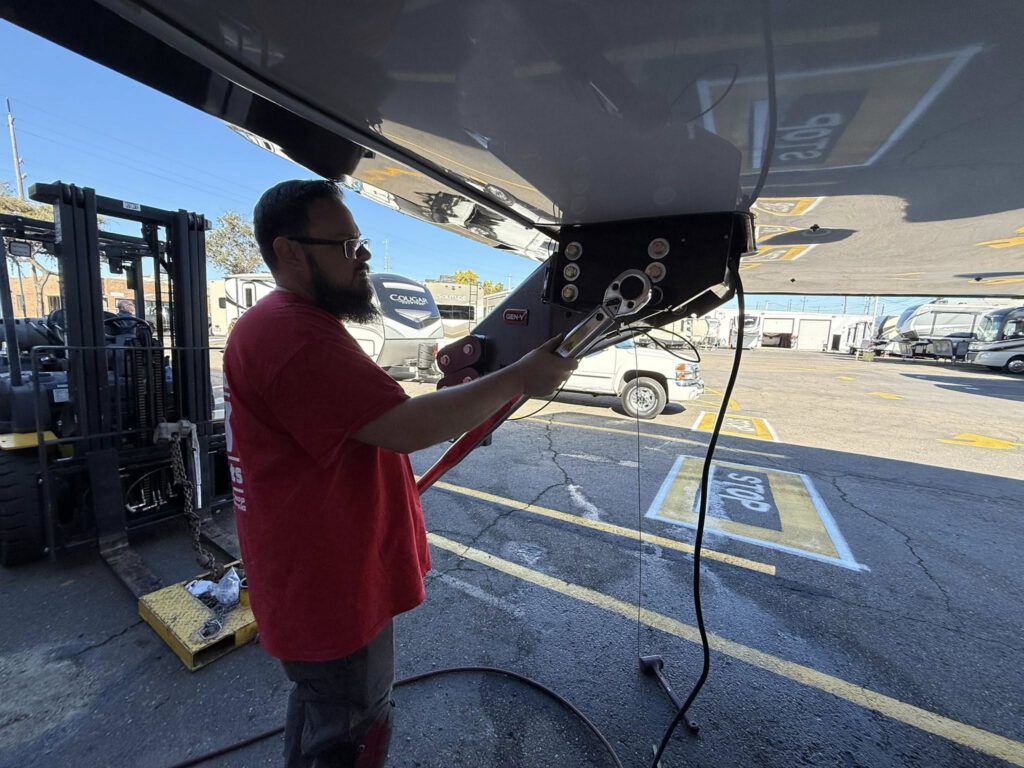
Visually inspect all structural areas of the pin box, including:
- Weld seams
- Mounting wings
- Frame connection points
Warning signs include:
- Cracked metal
- Rust streaking
- Flaking or bubbled paint
- Distorted weld beads
These can indicate early metal fatigue or structural stress.
3. Inspect Bolt Holes for Elongation
Carefully check all mounting holes.
- Round holes should remain perfectly circular
- Elongated or stretched holes indicate movement under load
- This often signals loosening or structural shifting
4. Check for Frame Movement or Stress
Observe the area where the pin box connects to the RV frame.
- Look for broken sealant lines
- Watch for visible movement during loading/unloading
- Any shifting may indicate excessive stress on the frame structure
5. Inspect Shock or Air Components (If Equipped)
If your RV uses systems such as MORryde, Rota-Flex, air-ride, or similar:
- Check rubber components for cracking or tearing
- Inspect air systems for leaks or pressure loss
- Verify bushings and dampeners are not worn or loose
Manufacturer & Lippert Recommendations
Many fifth wheel RVs use components manufactured by Lippert (LCI) or similar suppliers. Their guidelines emphasize regular inspection and torque verification.
Key recommendations include:
- Turning Point Pin Box: Recheck fasteners every 500 miles
- Typical torque values:
- Mounting bolts: ~175 ft-lbs
- Wedge bolts: ~200 ft-lbs
- Proper identification is critical:
- Models such as 1621, 1716, and others must be matched to correct weight ratings
- Lippert now uses dot-peen identification due to sticker wear over time
- Structural requirement:
- RVs under 18,000 GVWR typically require a minimum of four bolts per side
- RVs 18,000 GVWR and above require at least five bolts per side
Always verify your specific unit requirements before service or adjustment.
Warning Signs of Pin Box Failure
Be alert for early symptoms of potential issues:
- Excessive chucking (front-to-back jerking during towing)
- Clunking or popping noises during acceleration or braking
- Noticeable frame flex under load
- Movement at the hitch connection point
- Uneven or unstable towing feel
These symptoms should never be ignored and should be inspected immediately.
Protecting Your RV, Truck, and Safety
No matter what system you use—MORryde, Lippert (LCI), Curt, Reese, Gen-Y Hitch, or stock pin box assemblies—proper inspection and torque verification are essential.
At California RV Specialists, we emphasize preventive maintenance and real-world inspection experience to help RV owners avoid costly structural damage and unsafe towing conditions.
We are here to help in the shop, through inspections, and through ongoing safety education across our RV community and online groups.
Final Reminder from California RV Specialists
Your pin box is the critical connection between your RV and your tow vehicle. Do not assume it is maintenance-free.
Inspect it. Torque it. Watch it. Protect yourself and everyone behind you on the road.
California RV Specialists
200 S Cherokee Lane
Lodi, CA 95240
Phone: 209-263-7040
Website: www.calrvspecialists.com
Open Monday–Friday, 8:00 AM – 4:00 PM