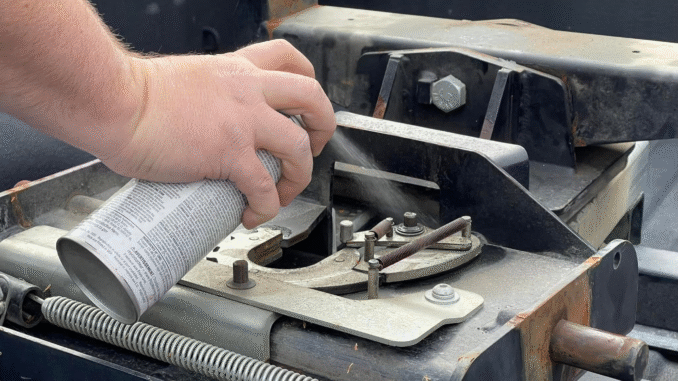
By California RV Specialists
Whether you tow a travel trailer, fifth wheel, toy hauler, or flat tow a vehicle behind your motorhome, your hitch system is one of the most important safety components on your RV. Every mile you travel places thousands of pounds of force on your hitch, yet it’s one of the most overlooked maintenance items by many RV owners.
At California RV Specialists, we regularly inspect hitch systems that have excessive wear, loose hardware, lack of lubrication, or damage that could have been identified much earlier through routine maintenance.
The good news is that many hitch-related problems can be prevented with regular inspections and proper maintenance.
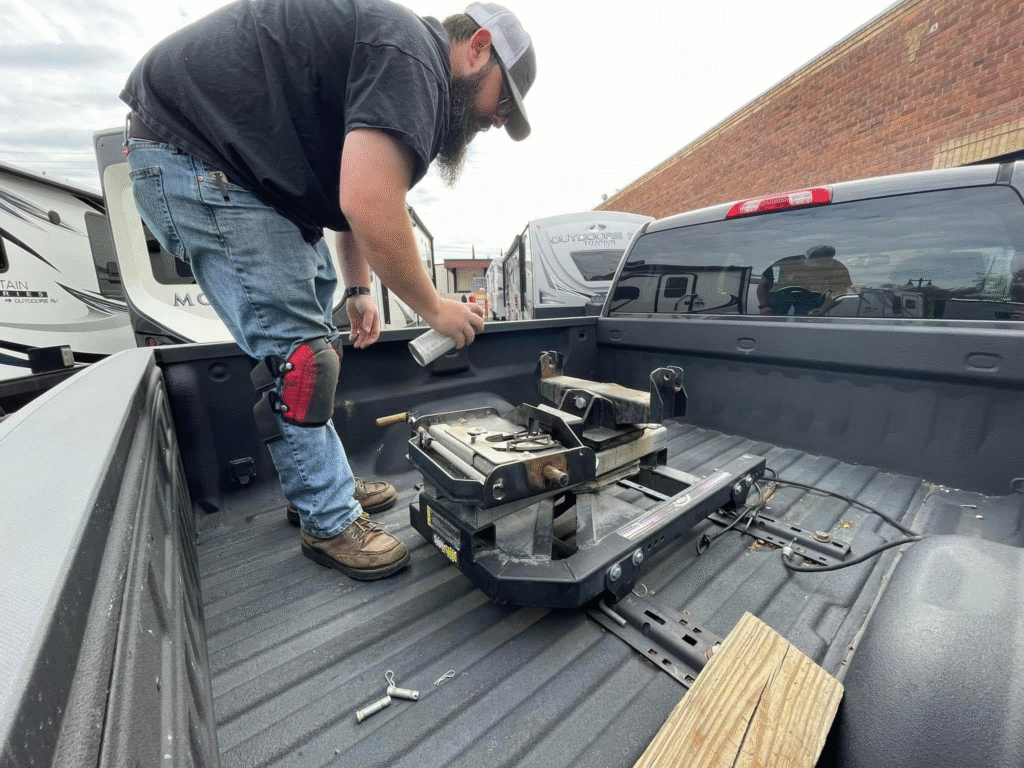
Why Hitch Maintenance Matters
Every time you tow your RV, your hitch is subjected to:
- Constant vibration
- Road shock
- Heavy tongue or pin weight
- Braking forces
- Acceleration forces
- Side-to-side movement
- Twisting while entering driveways and campsites
- Normal wear from thousands of miles of towing
Over time, these forces can loosen hardware, wear moving components, reduce lubrication, and accelerate normal wear.
Ignoring routine maintenance may eventually lead to premature component failure, poor towing performance, expensive repairs, or unsafe towing conditions.
Travel Trailer Hitch Maintenance
If you tow a travel trailer, your inspection should include:
- Hitch receiver inspection
- Weight distribution hitch components
- Sway control devices
- Hitch ball condition
- Ball mount inspection
- Coupler operation
- Safety chains
- Breakaway switch and cable
- Electrical connector
- Hitch pins and retaining clips
- Mounting hardware
- Signs of excessive wear or corrosion
If your weight distribution hitch uses friction points or grease fittings, follow the manufacturer’s recommendations regarding lubrication.
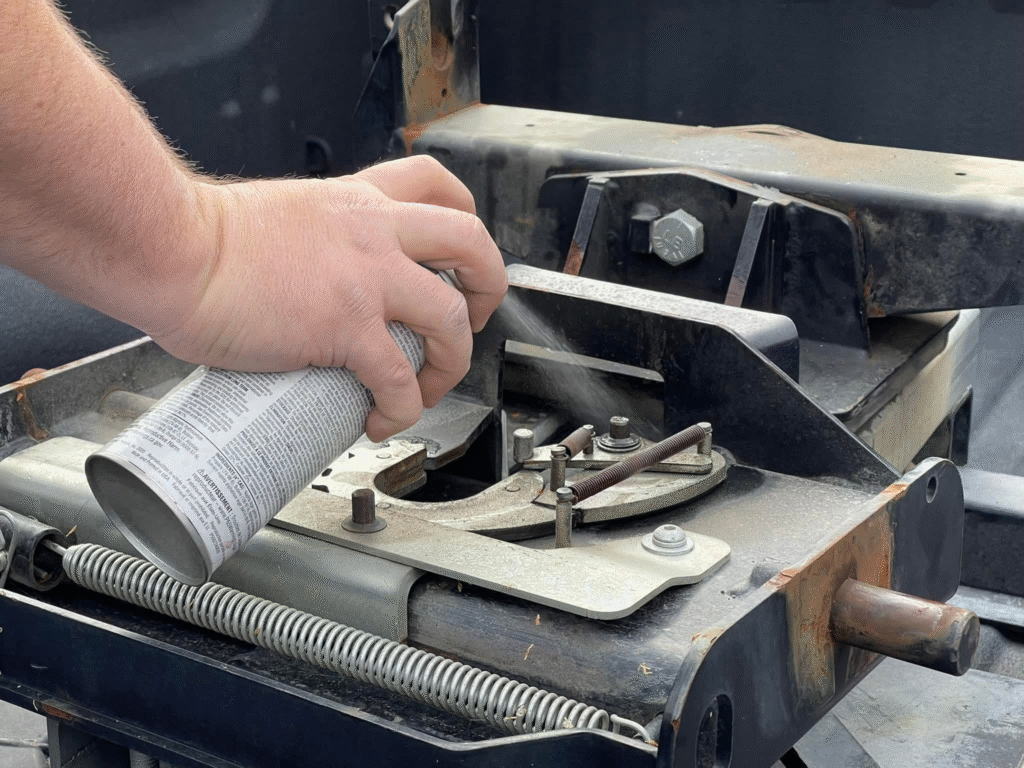
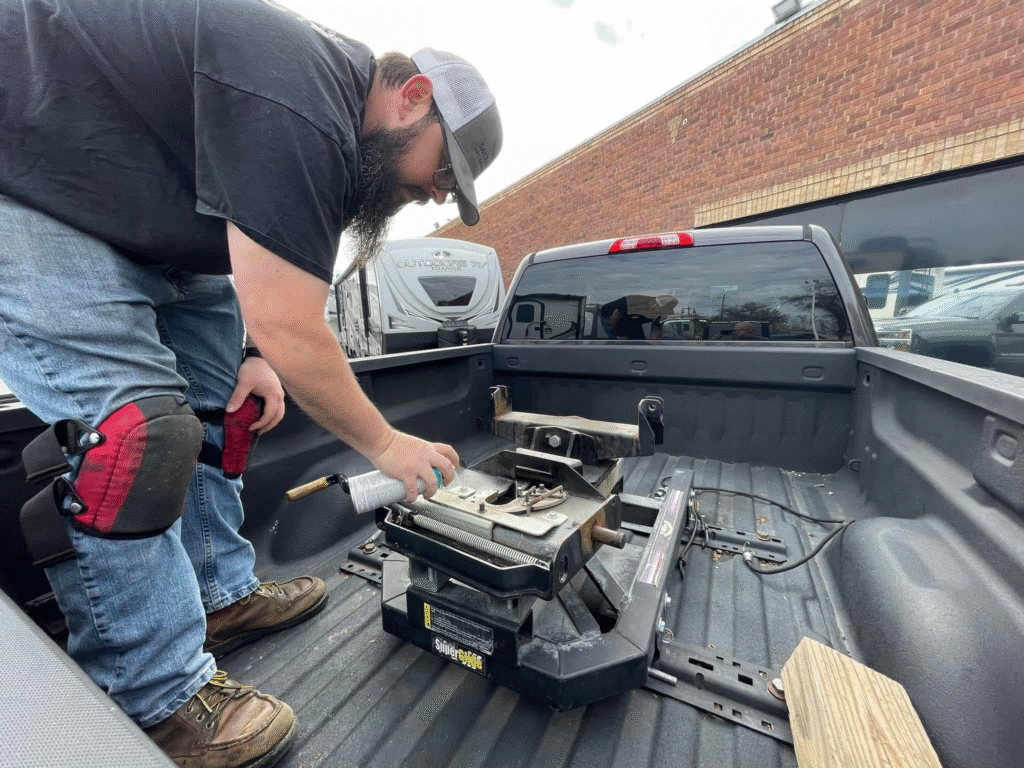
Fifth Wheel Hitch Maintenance
Fifth-wheel hitches require regular inspections because they carry significantly more weight than most travel trailer hitches.
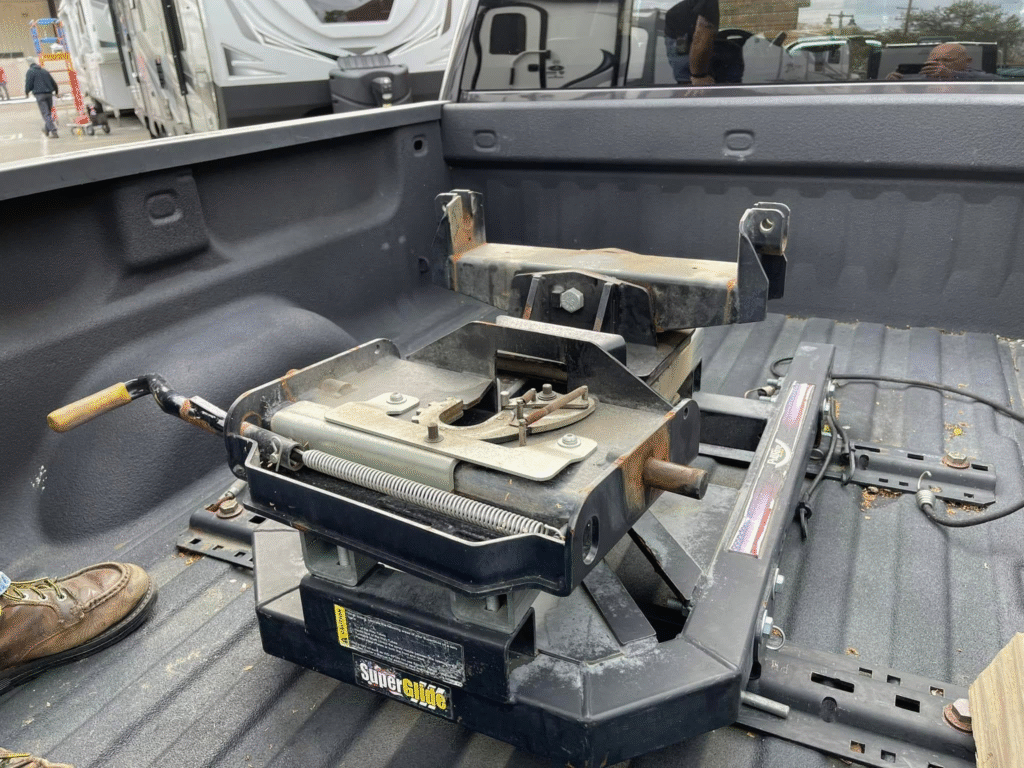
Inspect your fifth-wheel hitch for:
- Proper jaw operation
- Hitch head movement
- Pivot bushings
- Wear plates
- Locking mechanism
- Release handle
- Hitch pins
- Mounting rails
- Frame attachment hardware
- Rust or corrosion
- Proper lubrication
A properly lubricated hitch not only reduces wear but can also improve ride quality and make hitching and unhitching easier.
Don’t Forget the Pin Box
The hitch isn’t the only component that deserves attention.
Your pin box should also be inspected regularly for:
- Loose mounting bolts
- Cracked welds
- Frame movement
- Elongated bolt holes
- Rust around mounting points
- Signs of metal fatigue
- Damaged rubber isolators (if equipped)
- Wear on the king pin
Movement between the pin box and frame should never be ignored, as it may indicate loose hardware or structural issues that require further inspection.
Inspect Your King Pin
The king pin is the connection between your RV and your tow vehicle.
Look for:
- Excessive wear
- Rust
- Flat spots
- Gouges
- Damage from improper hitching
- Cracks
- Deformation
Any damage should be evaluated before towing.
Safety Components Matter Too
Every hitch inspection should also include:
- Breakaway cable
- Breakaway switch
- Safety chains
- Emergency electrical connector
- Seven-way plug
- Trailer wiring
- Connector pins
- Trailer connector operation
- Hitch locking devices
- Safety clips
These components are critical to safe towing and should be inspected before every trip.
Common Signs Your Hitch Needs Attention
If you notice any of the following, your hitch should be inspected:
- Clunking while accelerating or braking
- Excessive chucking
- Unusual towing movement
- Uneven hitch wear
- Loose hardware
- Difficulty hitching or unhitching
- Excessive rust
- Cracked paint around welds
- Grease contamination
- Unusual noises while towing
Don’t ignore these warning signs.
They may indicate worn or damaged components that should be repaired before your next trip.
Preventative Maintenance Saves Money
Routine hitch maintenance is one of the simplest ways to protect your investment.
Regular inspections can help prevent:
- Premature hitch wear
- Pin box damage
- Frame damage
- Loose hardware
- Improper towing
- Hitch failure
- Expensive repairs
- Unsafe towing conditions
A properly maintained hitch also provides smoother towing and greater confidence on the road.
California RV Specialists Can Help
Since 2003, California RV Specialists has helped approximately 1,200 to 1,500 RV owners every year maintain, inspect, and repair their RVs.
We inspect and service many types of towing systems, including:
- Fifth-wheel hitches
- Travel trailer hitches
- Weight distribution hitches
- Sway control systems
- Gooseneck adapters
- Flat tow systems
- Pin boxes
- Shock-absorbing pin boxes
- Gen-Y Hitch products
- Reese Goose Box systems
- CURT hitches
- B&W Companion hitches
- PullRite hitches
- Demco hitches
- Andersen hitch systems
Whether you’re preparing for a cross-country trip or simply want peace of mind before your next camping adventure, our experienced technicians can inspect your hitch system and identify potential problems before they become expensive repairs.
A properly maintained hitch is one of the most important investments you can make in your RV’s safety.
Schedule Your RV Hitch Inspection
If it’s been a while since your hitch was inspected, now is a great time.
Contact California RV Specialists to schedule a professional hitch inspection and help ensure your RV is ready for the road.
Helping RV Owners Since 2003
Contact us to schedule a appointment today!
- Office Phone: 209-263-7040
- Hours of operation:
- 8 am to 4 pm Monday-Friday; Closed Saturday & Sunday
- Closed for lunch 12 pm – 1 pm
- Address: 200 S. Cherokee Lane, Lodi, CA 95240
Make sure you check out our YouTube channel for more helpful information, and other social media pages.