When it comes to preventing water intrusion in your RV, the materials used behind exterior moldings, windows, doors, and other components are just as important as the sealants you see on the outside.
For decades, traditional putty tape has been widely used throughout the RV industry. However, newer butyl rubber sealing products offer an alternative worth considering.
At California RV Specialists in Lodi, California, we’ve been repairing and maintaining recreational vehicles since 2003. Over the years, we’ve seen how different sealing materials perform after exposure to sunlight, temperature changes, road vibrations, and normal RV body movement.
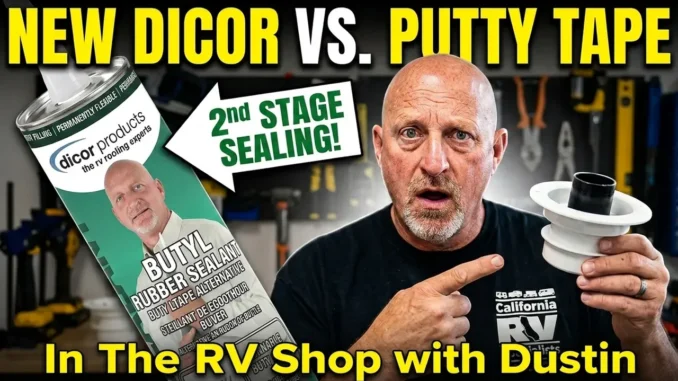
In our accompanying YouTube video, Dustin takes a closer look at Dicor butyl rubber sealant, demonstrates the product in person, and explains why he likes it as an alternative to traditional RV putty tape.
What Is Traditional RV Putty Tape?
Putty tape is a flexible sealing material commonly installed between exterior RV components and the body of the recreational vehicle.
It’s often found behind:
- Exterior corner moldings
- Windows and entry door frames
- Compartment doors
- Exterior trim and termination strips
- Other mechanically fastened components
When the component is installed and tightened, the putty tape compresses between the surfaces to help create a weather-resistant seal.
Traditional putty tape has been used in RV manufacturing and repairs for many years because it’s relatively inexpensive, easy to work with, and suitable for certain applications.
However, not all putty tape formulations perform the same way.
Why Traditional Putty Tape Can Become a Problem
One of the common conditions we encounter at California RV Specialists is putty tape squeezing or bleeding out from behind exterior moldings.
As RVs travel down the road, their bodies experience vibration, flexing, and movement. Temperature changes can also affect sealing materials.
Depending on the product, installation, and environmental exposure, some traditional putty materials can gradually deform, harden, or lose their ability to maintain an effective seal.
Here in California, prolonged heat and sunlight can contribute to the aging of exterior sealing materials.
It’s important to understand that visible putty squeeze-out does not automatically mean a joint is leaking. However, it can be a reason to inspect the molding, fasteners, and exterior sealant more closely.
What Is Dicor Butyl Rubber Sealant?
Dicor offers butyl-based sealing products intended for compatible RV sealing applications.
Butyl rubber sealing materials are designed to remain flexible and provide a compressed seal between appropriate mating surfaces.
Compared with some traditional putty formulations, quality butyl-based materials may offer advantages in flexibility, adhesion, and resistance to certain aging conditions.
However, performance depends on the specific product, surface preparation, installation, and application.
Not all butyl products are identical, and a product’s suitability should be confirmed against its manufacturer’s instructions.
Why Dustin Likes This Butyl Rubber Product
In our video, Dustin demonstrates the Dicor product and explains why it has caught his attention.
From a repair technician’s perspective, the important considerations include how a material handles during installation, how it compresses behind moldings, and whether it is appropriate for the joint being repaired.
Here are several reasons butyl-based sealing products are worth evaluating.
1. Flexibility for RV Body Movement
Recreational vehicles are constantly exposed to movement during travel.
A sealing material that remains appropriately flexible can help accommodate movement between compatible components.
2. Sealing Behind Exterior Moldings
Butyl-based materials are commonly used as bedding seals behind mechanically fastened components.
When properly installed, the material compresses between the surfaces to help reduce moisture entry through the joint.
3. An Alternative to Conventional Putty Tape
Traditional putty tape can be appropriate for many applications, but butyl rubber products offer another option when the manufacturer and installation requirements permit their use.
4. Considerations for Long-Term Maintenance
The goal of selecting a sealing material is to help maintain a reliable joint over time.
Proper fastener installation, compatible materials, surface preparation, and periodic inspections are all essential.
No bedding tape or sealant should be considered permanently maintenance-free.
Watch Dustin from California RV Specialists demonstrate Dicor butyl rubber sealant and explain why he likes this product compared with traditional RV putty tape.
Is Butyl Rubber Better Than Traditional Putty Tape?
The answer depends on the application.
For certain mechanically fastened joints, a properly selected butyl rubber sealing product may offer advantages over some traditional putty tape formulations.
However, it would be misleading to say that every butyl rubber product is automatically better for every RV.
Some manufacturers specify particular bedding materials, thicknesses, compression requirements, or installation methods.
The most important consideration is choosing the correct product for the specific roofing or exterior body assembly.
A quality sealing material is only one part of a properly installed and maintained joint.
Why Exterior Sealant Still Matters
One common misconception is that installing a new bedding tape eliminates the need for exterior sealant maintenance.
On many RV assemblies, the bedding material and exposed exterior sealant perform different functions.
Bedding tape helps seal between mating surfaces, while compatible exterior sealants may provide additional weather protection around designated joints and edges.
At California RV Specialists, we regularly inspect exterior moldings, windows, doors, and other areas where water can enter.
We also encourage RV owners to follow their manufacturer’s recommended inspection schedule.
When Should RV Exterior Moldings Be Resealed?
Warning signs that deserve closer inspection include:
- Cracked or separated exterior sealant
- Loose or shifting moldings
- Exposed or deteriorating bedding material
- Missing or damaged fasteners
- Visible gaps around windows or doors
- Staining, swelling, or other indications of possible moisture intrusion
Some of these conditions may require exterior resealing, while others may require removing and reinstalling the affected component.
Simply applying more caulking over a loose or improperly sealed molding may not correct the underlying problem.
Free RV Roof and Exterior Body Inspections in Lodi, California
At California RV Specialists, we’ve been helping RV owners maintain and repair their recreational vehicles since 2003.
Our independent RV repair facility offers free roof and exterior body inspections to help identify maintenance concerns before they become major repairs.
Our services include:
- Complete RV exterior body resealing
- RV roof inspections, resealing, repairs, and roof coatings
- Window, door, and exterior molding repairs
- RV slide-out inspections and repairs
- Wheel bearing and brake services
- Fifth-wheel and travel trailer suspension upgrades
- Manufacturer warranty repairs for participating brands
For customers who have a complete exterior body reseal performed at our facility, we also provide a 90-day follow-up inspection and spot sealing service at no additional charge, helping us evaluate the completed work and address any areas requiring attention.
We serve RV owners throughout Lodi, Stockton, Sacramento, Modesto, Galt, Elk Grove, and surrounding Northern California communities.
Schedule Your RV Exterior Inspection
If you’ve noticed deteriorating sealants, putty tape squeezing out around moldings, or possible water intrusion, our team can help evaluate the condition of your RV.
California RV Specialists
200 S. Cherokee Lane
Lodi, CA 95240
Business Hours: Monday–Friday, 8:00 AM–4:00 PM
Closed for lunch: 12:00 PM–1:00 PM
Website: https://www.calrvspecialists.com/
Free Inspections: RV roof and exterior body inspections, slide-out inspections, and fifth-wheel hitch inspections.
Please contact our office to schedule an appointment. We are a drop-off repair facility and do not offer mobile RV service.
The bottom line: Dicor butyl rubber sealant is an interesting alternative to traditional RV putty tape, particularly for suitable mechanically fastened exterior components. But choosing the correct material, installing it properly, and maintaining the surrounding joints are what ultimately help protect your RV against water intrusion.