Are your travel trailer or fifth wheel lights not working properly? Before replacing parts or chasing electrical problems, start by checking your tow vehicle’s 7-way trailer connector.
One of the most frustrating problems RV owners experience is discovering that their trailer running lights, turn signals, or brake lights aren’t working just before leaving on a trip.
At California RV Specialists in Lodi, California, we regularly help RV owners diagnose towing electrical problems involving pickup trucks, fifth wheels, travel trailers, and other towable RVs.
One simple tool we recommend keeping in your truck is a 7-way RV trailer wiring socket tester. This inexpensive diagnostic accessory can help identify certain tow vehicle wiring problems before you begin troubleshooting the trailer itself.
What Is a 7-Way RV Trailer Wiring Tester?
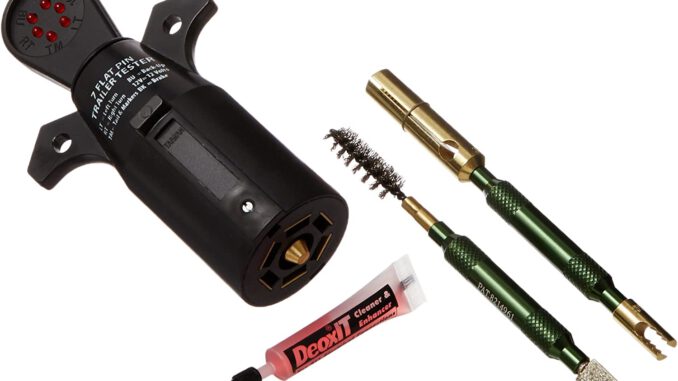
A 7-way trailer wiring tester is a compact electrical testing device designed to plug into the 7-blade RV-style trailer socket on a compatible tow vehicle.
Many testers feature LED indicators that illuminate when the corresponding electrical circuits are activated.
Depending on the tester’s design, it may help check:
- Left turn signal and brake light circuit.
- Right turn signal and brake light circuit.
- Running and tail light circuit.
- Reverse or auxiliary circuit, where equipped.
- 12-volt auxiliary power supply.
- Electric trailer brake controller output, on compatible testers.
The tester allows you to check certain functions of the truck’s trailer socket without connecting the RV.
Important: Not all 7-way testers evaluate every circuit, and some brake-controller functions require specialized testing equipment or a connected trailer load.

Why Every RV Owner Should Carry a Trailer Wiring Tester
Imagine preparing to leave a campground and discovering that your trailer’s running lights aren’t working.
Is the problem in your pickup truck, the trailer’s 7-way cord, the trailer junction box, or the lighting system itself?
Without basic testing equipment, it can be difficult to determine where to begin.
A plug-in tester provides a quick starting point by helping determine whether the tow vehicle is producing the expected electrical signals at its trailer connector.
Potential benefits include:
- Faster preliminary electrical troubleshooting.
- Identifying certain blown fuse or missing-output concerns.
- Checking trailer socket functions before connecting the RV.
- Helping distinguish truck-side problems from trailer-side problems.
- Reducing unnecessary parts replacement.
- Providing a convenient tool for pre-trip inspections.
Although a wiring tester doesn’t replace professional electrical diagnosis, it can save time when troubleshooting common towing problems.
How to Use a 7-Way Trailer Socket Tester
Most basic plug-in testers are relatively easy to use.
Step 1 – Inspect the Tow Vehicle Connector
Before inserting the tester, look for damaged terminals, corrosion, moisture, loose wiring, or other visible problems.
Step 2 – Plug the Tester Into the 7-Way Socket
Make sure the tester is compatible with your truck’s RV-style 7-blade connector.
Step 3 – Activate the Lighting Functions
With the assistance of another person, operate the left turn signal, right turn signal, running lights, and other applicable functions.
Step 4 – Observe the LED Indicators
Check whether the tester displays the expected signals according to its instructions.
Step 5 – Investigate Any Missing Signals
If a circuit does not respond as expected, check the tow vehicle’s applicable fuses, connector, wiring, and towing electrical system.
A tester that shows normal output doesn’t guarantee the trailer wiring is good. It only helps narrow down where the problem may be located.

Common RV Trailer Wiring Problems
Trailer Running Lights Not Working
If your trailer running lights aren’t functioning, possible causes include a blown fuse, corroded connector, damaged wiring, poor ground connection, or a problem in the trailer lighting circuit.
A socket tester can help determine whether the truck is providing the expected running light signal.
Turn Signals or Brake Lights Not Working
When one or both trailer turn signals or brake lights stop functioning, the problem may involve the truck’s wiring, trailer connector, damaged wiring, lighting assemblies, or grounding.
Checking the truck’s socket first can help narrow down the concern.

Intermittent Trailer Lights
Lights that flicker or stop working while driving may indicate loose connections, damaged terminals, corrosion, or wiring that moves with road vibration.
A basic tester may not reproduce every intermittent problem, particularly one that occurs only when the trailer is connected.
Trailer Brakes Not Responding
Electric trailer brake problems can involve the brake controller, wiring, ground connections, brake magnets, or trailer brake assemblies.
Some socket testers provide limited indications of brake controller output, but a basic LED tester cannot confirm that the trailer brakes are functioning properly or producing adequate braking force.
If you suspect a trailer brake problem, have the complete braking system inspected before towing.
Understanding the 7-Way RV Trailer Connector
The standard RV-style 7-blade connector is commonly used on fifth wheels, travel trailers, and other trailers equipped with electric brakes.
Its functions typically include:
- Ground connection.
- Tail and running lights.
- Left turn and stop lights.
- Right turn and stop lights.
- Electric brake output.
- Auxiliary 12-volt power.
- Reverse or auxiliary lighting.
Wire colors and terminal assignments can vary by manufacturer and installation.
Never assume that wire colors alone identify the correct circuit. Use the appropriate connector diagram and verify each function before making electrical repairs.
What a 7-Way Wiring Tester Cannot Tell You
Although a trailer socket tester is helpful, it has important limitations.
It generally cannot determine whether:
- The trailer’s brake magnets are operating correctly.
- The trailer’s wiring can carry the required current under load.
- A connection has excessive voltage drop under actual operating conditions.
- The trailer has damaged wiring inside its underbelly.
- The trailer’s junction box has loose or corroded connections.
- Individual trailer lights or brake assemblies are defective.
Some modern tow vehicles also use trailer-detection systems that may behave differently when a low-load tester is connected.
For these reasons, a socket tester is best viewed as a preliminary diagnostic tool, not a complete trailer electrical inspection.
Don’t Forget Your RV’s 7-Way Cord and Junction Box
Even if your pickup truck’s trailer socket tests correctly, the problem may still be on the trailer.
The trailer’s 7-way cord is exposed to weather, road debris, repeated bending, and vibration.
Over time, connections may loosen, terminals may corrode, and wiring may become damaged.
We recommend periodically inspecting the trailer plug, cord, strain relief, and junction box for visible wear or deterioration.
A damaged 7-way cord can affect more than just your trailer lights. Depending on the failure, it may interfere with electric brakes or auxiliary charging circuits.
Recommended RV Tool: 7-Way Trailer Socket Tester
For RV owners who frequently tow a fifth wheel, travel trailer, toy hauler, or utility trailer, a compact 7-way socket tester is a useful addition to the truck’s maintenance supplies.
The original product featured in this article is a plug-in tow vehicle wiring tester designed for compatible RV-style 7-blade sockets.
Recommended Product: 7-Way RV Trailer Wiring Socket Tester
7-Way Flat Pin Tractor Trailer Circuit Tester, Black
Before purchasing, verify that the tester supports your vehicle’s connector type and the functions you want to check.
Affiliate disclosure: We may earn a commission from qualifying purchases through our product links, at no additional cost to you.
Inspect Your Trailer Electrical Connections Before Traveling
Before your next RV trip, take a few minutes to check your towing electrical system.
Inspect the 7-way plug and socket for corrosion or damage. Confirm that the trailer running lights, brake lights, and turn signals function correctly.
Check the trailer brake controller and perform the appropriate operational checks according to the controller and trailer manufacturers’ instructions.
Make sure the trailer cord is securely connected and routed so it cannot drag on the ground or become pinched during turns.
A few minutes of inspection before leaving can help prevent electrical problems on the road.
Professional RV Trailer Wiring & Brake Repairs in Lodi, California
At California RV Specialists, we’ve been helping RV owners maintain, repair, and upgrade their recreational vehicles since 2003.
Our technicians can assist with towing electrical concerns, 7-way connectors, trailer wiring, brake controllers, and related trailer electrical systems.
Whether you’re experiencing intermittent trailer lights, a damaged 7-way cord, or electric brake concerns, our team can help identify the problem and recommend appropriate repairs.
Don’t wait until you’re preparing to leave for a camping trip to discover your trailer lights or brakes aren’t working!
Contact California RV Specialists to discuss your RV trailer wiring concerns or schedule an inspection.
Contact California RV Specialists
California RV Specialists – Independent RV Service & Repair Facility
Address:
200 S. Cherokee Lane
Lodi, CA 95240
Phone: (209) 263-7040
Website: www.calrvspecialists.com
Business Hours:
Monday – Friday: 8:00 AM – 4:00 PM
Closed for Lunch: 12:00 PM – 1:00 PM
Saturday & Sunday: Closed
Serving RV Owners Since 2003
Proudly serving RV owners throughout Lodi, Stockton, Galt, Elk Grove, Sacramento, Modesto, and surrounding Northern California communities.
We Don’t Sell RVs – We Repair the RV You Own!
More from Dustin
Make sure you check out my website, California RV Specialists, and our YouTube channel for more helpful information, and see our published articles on RVtravel.com and other social media pages.