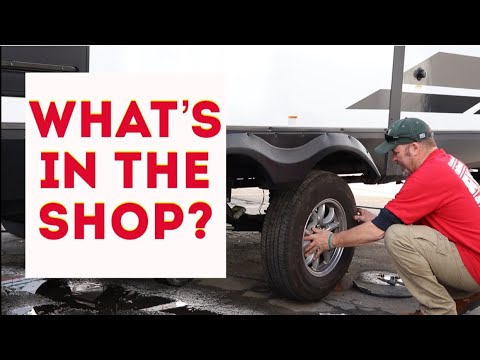
When was the last time you had the brakes and wheel bearings inspected on your fifth wheel or travel trailer?
Many RV owners regularly check their tires, inspect the roof, and maintain their appliances, but overlook two of the most important components underneath their trailers: wheel bearings and brakes.
At California RV Specialists in Lodi, California, we regularly inspect and service wheel bearings, electric brakes, and suspension components on fifth wheels, travel trailers, and toy haulers.
Unfortunately, we’ve seen trailers arrive at our shop with severely worn brake components, damaged bearings, broken wiring, and other problems that owners didn’t realize existed.
One particular RV inspection demonstrated just how serious these hidden problems can become.
A Real RV Brake Failure Found at Our Shop
During a routine wheel bearing service at California RV Specialists, our technicians discovered multiple serious concerns on the same trailer.
Here’s what we found:
- Three of the four brake assemblies had severely worn brake shoes, resulting in damage to the brake drums.
- The roadside rear brake magnet wiring was severed, leaving that brake assembly inoperative.
- Several brake components showed corrosion and deterioration, including damage to the brake shoes and backing plate.
- All wheel bearings showed evidence of severe wear and heat damage, with inadequate lubrication and looseness in the bearing assemblies.
- Grease had escaped past a wheel seal, allowing contamination around the brake components.
These conditions weren’t simply routine wear. They represented multiple failures affecting the trailer’s braking and wheel-end systems.
Without a proper inspection, some of these problems could have remained unnoticed until a roadside breakdown or more serious failure.


Why RV Trailer Brakes Fail
Most conventional travel trailers and fifth wheels use electric drum brakes, although some are equipped with electric-over-hydraulic disc brake systems.
Electric drum brakes rely on the brake controller, wiring, magnets, mechanical components, and brake shoes working together.
Common causes of brake failure include:
- Worn or damaged brake shoes.
- Broken or disconnected brake magnet wiring.
- Faulty or deteriorated brake magnets.
- Improperly adjusted brake assemblies.
- Damaged or excessively worn brake drums.
- Poor electrical connections or grounding.
- Incorrect brake controller setup.
- Grease contamination from failed wheel seals.
- Corrosion and deterioration from moisture exposure.
A trailer may still appear to stop when one or more brake assemblies aren’t functioning correctly because the tow vehicle and remaining trailer brakes may be compensating.


That doesn’t mean the trailer’s braking system is operating safely.
Why Wheel Bearing Maintenance and Brake Inspections Go Together
One of the most important benefits of a traditional wheel bearing repack service is the opportunity to inspect components that aren’t visible during a routine walk-around.
When the brake drums and hubs are removed, technicians can inspect the wheel bearings, races, grease seals, brake shoes, magnets, drums, and other related components.
This is important because a trailer can have a bearing problem and a brake problem at the same time.
For example, a deteriorated wheel seal may allow grease to enter the brake assembly, reducing braking effectiveness and contaminating the friction surfaces.
Likewise, a damaged brake magnet or worn brake shoe can damage the drum while the wheel bearing itself may still appear to be functioning.
A thorough wheel-end service evaluates the entire assembly rather than focusing only on adding grease.
What Is Included in an RV Wheel Bearing Pack Service?
For conventional serviceable trailer wheel bearings, a professional wheel bearing service generally includes several important steps.
At California RV Specialists, applicable service procedures may include:
- Removing wheels, hubs, and brake drums.
- Cleaning and inspecting bearings and bearing races.
- Inspecting hubs and drums for wear or damage.
- Repacking serviceable bearings with the specified grease.
- Replacing grease seals as required.
- Checking brake shoes, magnets, springs, and related hardware.
- Inspecting brake wiring and connections.
- Adjusting applicable manual-adjust drum brakes.
- Reassembling the wheel-end components to manufacturer specifications.
- Checking wheel fastener torque and applicable tire conditions.
- Performing appropriate brake function checks.
Depending on the service package and trailer condition, we may also inspect visible suspension components, including shackles, leaf springs, equalizers, and hangers.
Damaged bearings, races, brake components, or hubs must be repaired or replaced rather than simply cleaned and reused.
How Often Should RV Wheel Bearings Be Serviced?
A commonly referenced maintenance interval for many conventional trailer axles is every 12 months or 12,000 miles, whichever comes first.
However, the correct interval depends on the axle manufacturer, bearing design, operating conditions, and maintenance instructions for your specific trailer.
Some sealed or cartridge-style wheel-end systems have different service requirements and aren’t maintained through a traditional bearing repack.
Trailers used heavily, exposed to water, or operated under demanding conditions may require more frequent inspections.
If you recently purchased a used RV and don’t know when the bearings were last serviced, arranging an inspection is a sensible precaution.
Warning Signs of RV Wheel Bearing Problems
Wheel bearing problems don’t always produce obvious symptoms, but certain warning signs should never be ignored.
These may include:
- Unusual grinding or rumbling noises.
- Excessive heat at a wheel-end assembly.
- Grease leaking around the hub or brake drum.
- Abnormal wheel movement or looseness.
- Discolored or contaminated bearing grease.
- Unusual tire wear or vibration.
- A wheel that doesn’t rotate normally.
Excessive wheel-end heat may also be caused by dragging brakes or other mechanical problems, so proper diagnosis is important.
If you suspect a failing bearing or an overheated wheel-end assembly, stop towing and have the problem evaluated before continuing.
Why Adding Grease Isn’t Always Enough
Some trailer axles feature grease fittings or systems designed to make bearing lubrication more convenient.
However, adding grease through a fitting is not the same as disassembling the hub and inspecting the bearings and brakes.
A grease fitting cannot tell you whether the brake shoes are worn out, the brake magnet wiring is damaged, or the bearings have developed surface damage.
Incorrect lubrication procedures or excessive grease pressure can also contribute to grease seal problems and contamination.
Always follow the axle manufacturer’s lubrication procedure and use the specified grease.
The goal isn’t simply to put more grease into the hub. It’s to verify that the wheel-end components are in serviceable condition.
Don’t Ignore Your RV Suspension During Brake Service
When the trailer is already being serviced, it’s a good opportunity to inspect the suspension.
Worn shackle links, deteriorated bushings, cracked leaf springs, damaged hangers, and loose hardware can all affect the trailer’s reliability.
At California RV Specialists, we regularly identify suspension concerns during wheel bearing and brake inspections.
Finding these problems early may help prevent additional damage and unexpected breakdowns.
When Should RV Trailer Brakes Be Replaced?
Brake components should be evaluated according to their manufacturer’s inspection criteria and service limits.
Replacement may be necessary when brake shoes are excessively worn, friction material is damaged or contaminated, magnets are defective, or drums are damaged beyond allowable specifications.
Some repairs involve replacing individual components, while others may justify installing complete compatible brake assemblies.
For customers interested in additional braking performance, we can also discuss compatible trailer disc brake conversion options.
However, any upgrade must be selected for the trailer’s axle ratings, wheel and tire configuration, electrical system, and manufacturer requirements.
Schedule Your RV Wheel Bearing & Brake Service
At California RV Specialists, we’ve been helping RV owners maintain, repair, and upgrade their recreational vehicles since 2003.
Whether you own a travel trailer, fifth wheel, or toy hauler, routine wheel bearing and brake maintenance is an important part of keeping your trailer ready for the road.
Our technicians can inspect conventional trailer wheel bearings, brake assemblies, wiring, and related suspension components to help identify worn or damaged parts.
Don’t wait until a wheel bearing fails or your trailer brakes stop working to schedule maintenance.
Contact California RV Specialists to arrange your next RV wheel bearing and brake inspection.
Contact California RV Specialists
California RV Specialists – Independent RV Service & Repair Facility
Address:
200 S. Cherokee Lane
Lodi, CA 95240
Phone: (209) 263-7040
Website: www.calrvspecialists.com
Business Hours:
Monday – Friday: 8:00 AM – 4:00 PM
Closed for Lunch: 12:00 PM – 1:00 PM
Saturday & Sunday: Closed
Serving RV Owners Since 2003
Proudly serving RV owners throughout Lodi, Stockton, Galt, Elk Grove, Sacramento, Modesto, and surrounding Northern California communities.
We Don’t Sell RVs – We Repair the RV You Own!