Understanding Wind Pressure, Road Vibration, RV Body Flexing, and the Importance of Regular Inspections
When most RV owners think about awning maintenance, they typically think about cleaning the fabric, checking for tears, or making sure the awning extends and retracts properly.
However, there are several important components that often go unnoticed until something starts coming loose, separates from the RV, or becomes damaged.
At California RV Specialists, we’ve been servicing recreational vehicles since 2003, and one area we encourage RV owners to pay close attention to is the attachment and mounting hardware associated with patio awnings and slide-out topper awnings.
These components are constantly exposed to environmental conditions, highway travel, vibration, and normal movement of the RV.
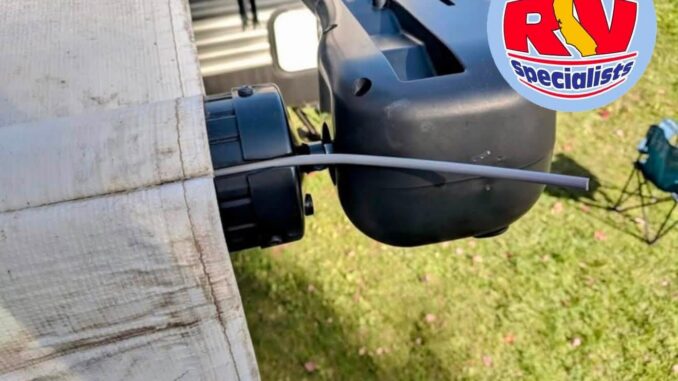
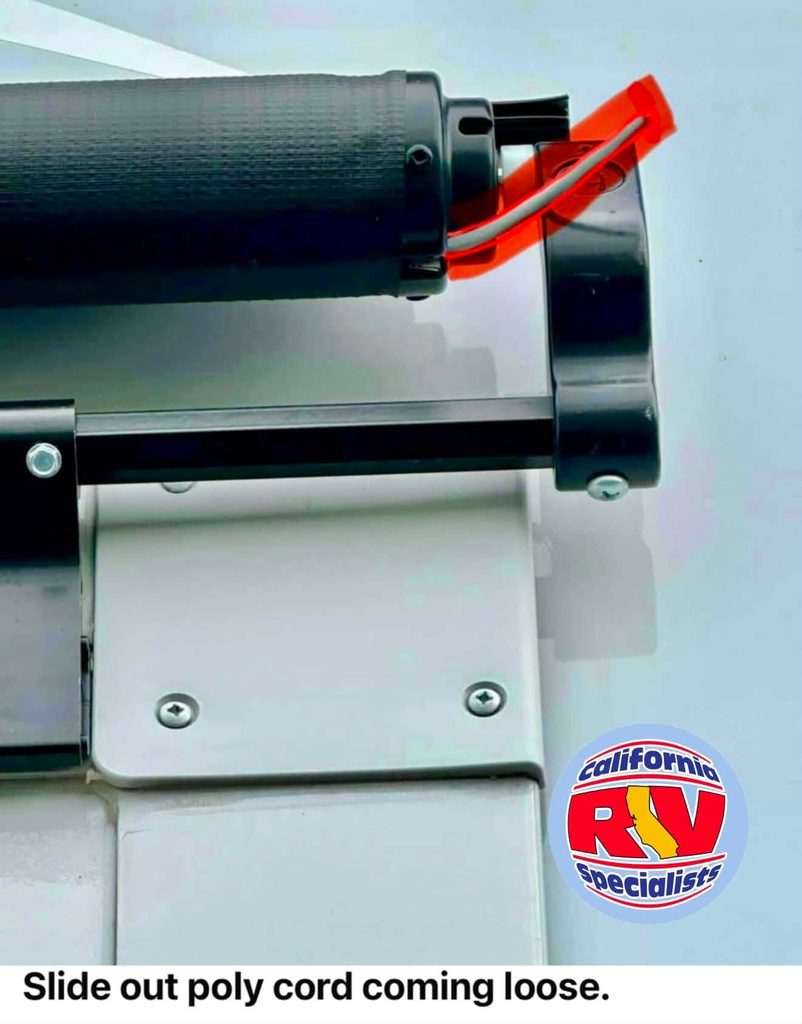
Over time, these forces can contribute to loose hardware, displaced poly cords or gimp cords, damaged mounting points, and separation of exterior wall moldings.
Understanding how and why these conditions develop is an important part of preventative RV maintenance.
What Are RV Awning Poly Cords and Gimp Cords?
Many RV patio awnings and slide-out topper awnings use a flexible cord sewn or incorporated into the edge of the awning fabric.
This cord is commonly referred to as a poly cord, awning welt, piping cord, or gimp cord, depending on the manufacturer and application.
The cord fits into a channel or track, allowing the awning fabric to be retained along the RV wall, awning roller tube, or other mounting components.
These cords play an important role in keeping the awning fabric properly positioned and secured.
Depending on the awning design, retaining screws, end stops, or other components may be used to help prevent the fabric or cord from shifting within the track.
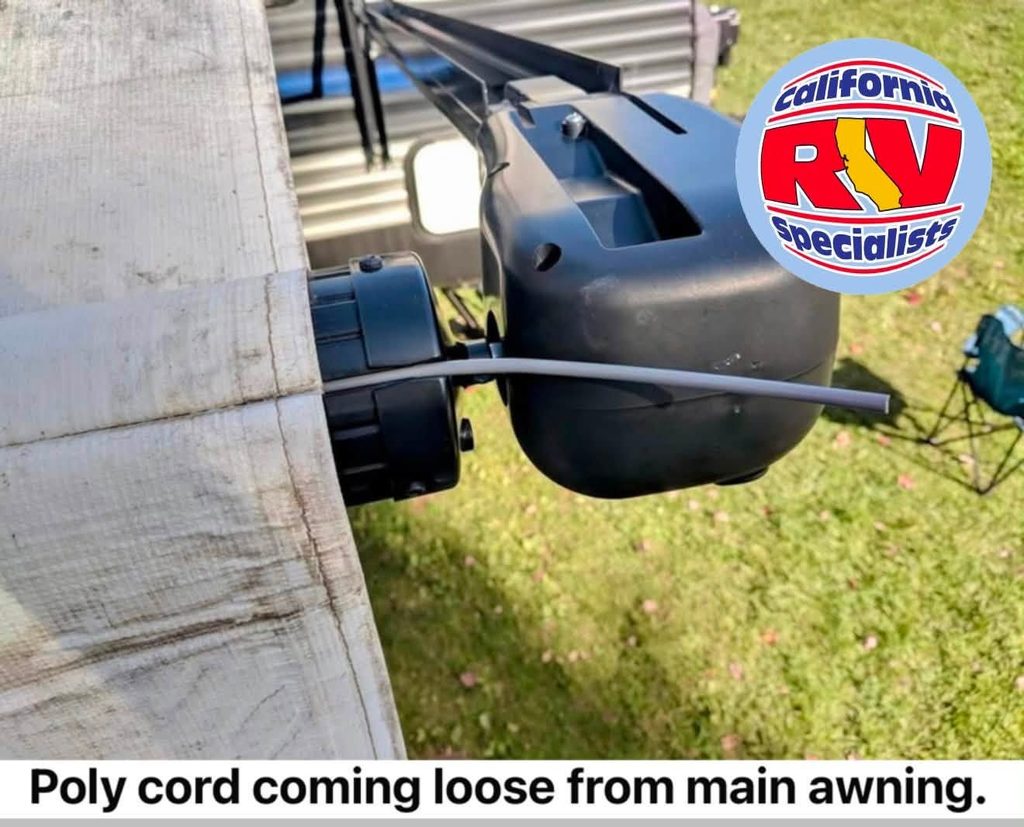
Why Do Poly Cords or Gimp Cords Work Their Way Out?
There are several possible contributing factors:
- Repeated awning extension and retraction
- Wind movement and fabric tension
- Road vibration during travel
- Normal flexing of the awning assembly
- Improper installation or missing retaining hardware
- Fabric shrinkage, stretching, or shifting
- Damaged, worn, or improperly sized awning tracks
- Loose mounting brackets or attachment hardware
When the cord begins moving out of its intended position, it can allow the fabric to shift, place additional stress on the awning assembly, or contribute to damage.
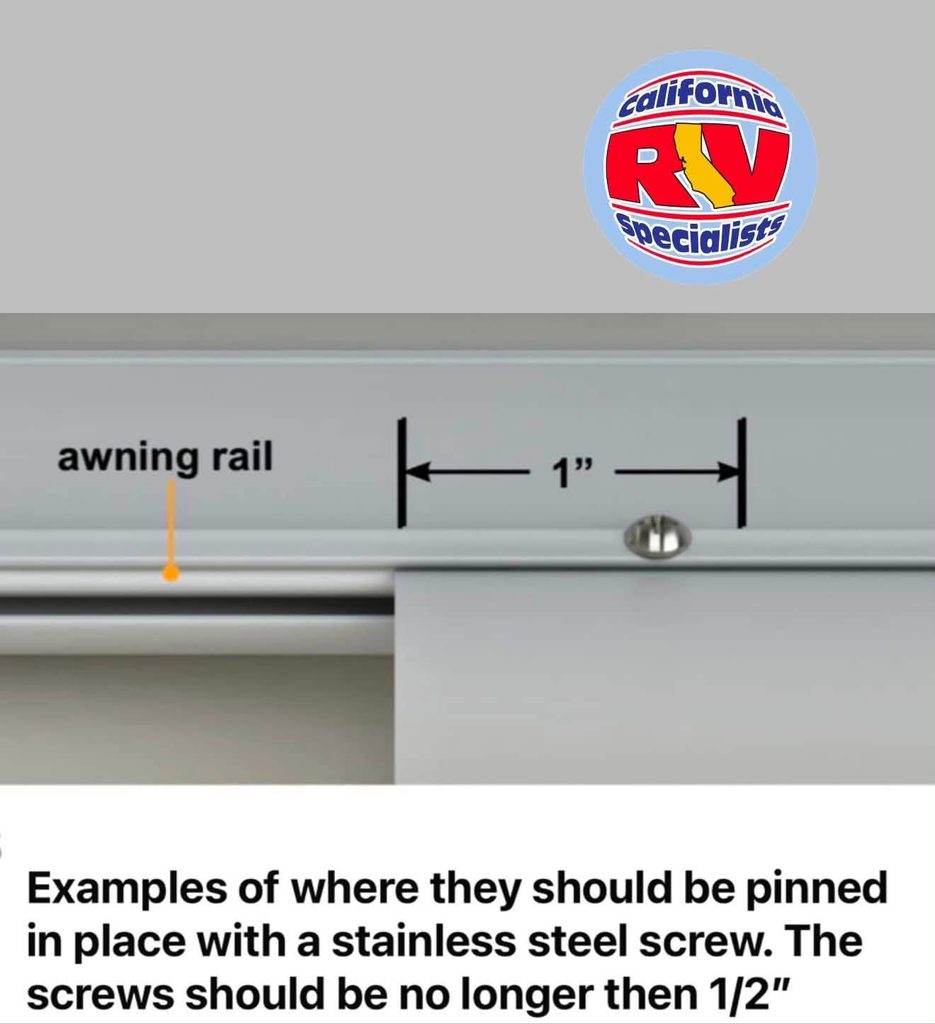
IMPORTANT: A poly cord or gimp cord that is working its way out should not automatically be considered normal wear. The cause should be identified, and the retaining components should be inspected.
Simply pushing the cord back into position without correcting the underlying issue may allow the condition to return.
Why Do RV Awning Screws, Washers, and Hardware Come Loose?
Another concern involves screws, washers, mounting brackets, and wall attachment hardware.
These components help secure the awning assembly to the RV structure.
During normal travel, an RV experiences constant movement.
Even when traveling on relatively smooth highways, the RV is subjected to vibration, changes in road elevation, cornering forces, and movement throughout the chassis and body.
Over thousands of miles, repeated loading can affect attachment points.
Some conditions we look for include:
- Screws beginning to back out
- Missing or damaged washers
- Loose mounting brackets
- Cracked or distorted mounting components
- Enlarged screw holes
- Movement between the awning brackets and RV wall
- Loose awning rail or wall moldings
- Gaps developing between mounted components and the exterior wall
- Damaged or deteriorated sealant around attachment points
Depending on the construction of the RV, these components may be attached to aluminum framing, wood reinforcement, laminated wall structures, or other mounting materials.
The condition and integrity of the material supporting the fasteners are just as important as the fasteners themselves.
A loose screw is not always corrected by simply tightening it.
If the mounting hole is damaged, the substrate is deteriorated, or the fastener is no longer properly engaging the supporting material, additional repairs may be necessary.
Understanding Wind Pressure and Aerodynamic Loading During Travel
One of the most overlooked factors affecting RV exterior components is aerodynamic loading.
When an RV travels at highway speeds, air flows over and around the front cap, roof, sidewalls, awnings, slide-out toppers, and other exterior accessories.
This airflow creates changing pressure distributions across the vehicle.
The amount and direction of these forces can change depending on:
- Vehicle speed
- Headwinds and crosswinds
- Passing trucks and larger vehicles
- Wind gusts
- Awning shape and position
- Exterior accessories and roof-mounted components
- Turbulence around the RV body
Even when a patio awning or slide-out topper is fully retracted, certain components remain exposed to airflow and vibration.
Depending on the design, these forces may create repeated loading on the awning housing, roller tube, fabric, brackets, or attachment points.
Think About What Happens at Highway Speeds
An RV traveling down the highway is continuously moving through air while also experiencing road vibration and body movement.
Although these forces may not be noticeable to the driver, the exterior components are repeatedly subjected to them.
A component that is already loose may experience additional movement as the RV continues traveling.
Over time, this can increase wear, enlarge mounting holes, or contribute to additional separation.
This is why we believe regular inspections of awning mounting hardware and exterior attachments are so important.
Road Vibration and Normal RV Body Flexing
Recreational vehicles are not completely rigid structures.
As an RV travels, the chassis and body experience movement from road conditions, suspension operation, cornering, and uneven surfaces.
This movement can be transferred to exterior components, including awnings and slide-out toppers.
Different materials also expand and contract at different rates as temperatures change.
For example, an RV may contain aluminum moldings, steel fasteners, plastic components, flexible awning fabric, sealants, and laminated wall assemblies.
These materials do not necessarily respond to temperature changes or repeated movement in the same way.
Over time, movement at attachment points may contribute to loosening, sealant deterioration, or component displacement.
However, not every loose fastener or separated molding is caused by normal flexing. Installation methods, fastener selection, material condition, and structural support must also be considered.
Why Do RV Awning Wall Moldings and Tracks Become Loose?
Awning rails and wall moldings are important because they help support and retain awning components.
If these moldings begin separating from the RV wall, several concerns can develop.
These may include:
- Increased movement of the awning fabric or track
- Loss of proper fastener engagement
- Damage to surrounding exterior wall materials
- Openings that may allow water intrusion
- Additional stress on nearby mounting hardware
- Possible damage to the awning assembly during travel
Water intrusion is particularly concerning because moisture can enter behind loose moldings or improperly sealed attachment points.
Depending on the RV construction, water intrusion may damage underlying materials before the owner notices any interior symptoms.
A loose wall molding should be inspected and corrected before it develops into a larger problem.
Slide-Out Topper Awnings Require Special Attention
Slide-out topper awnings are designed to help protect the top of the slide-out room from leaves, debris, and certain environmental conditions.
However, these systems also experience repeated movement and loading.
Every time the slide-out room extends or retracts, the topper fabric and roller assembly move through an operating cycle.
The topper is also exposed to wind, rain, sunlight, and temperature changes.
Common inspection items include:
- Topper fabric condition and alignment
- Poly cord or gimp cord retention
- Awning rail attachment
- Mounting bracket security
- Roller tube alignment
- Damaged or missing hardware
- Fabric movement within the awning track
- Proper extension and retraction
- Sealant condition around mounting points
If a slide-out topper begins shifting, sagging excessively, or pulling away from its mounting rail, the cause should be investigated.
Improper tension, damaged hardware, fabric deterioration, or mounting concerns may contribute to these conditions.
Why We Recommend Regular RV Awning Inspections
At California RV Specialists, we encourage RV owners to include patio awnings and slide-out topper awnings as part of their regular exterior maintenance inspections.
A properly performed inspection can help identify developing concerns before they become more expensive repairs.
We recommend inspecting these systems:
- Before extended trips
- After traveling on unusually rough roads
- After exposure to significant wind or storms
- Whenever unusual noises, movement, or fabric shifting are noticed
- During routine annual RV maintenance
Inspection frequency should also follow the specific awning manufacturer’s recommendations.
Owners should pay particular attention to missing screws, displaced cords, loose brackets, gaps around wall moldings, and damaged sealants.
CAUTION: Awning roller assemblies can contain spring-loaded components under significant tension. Do not attempt to disassemble or adjust these components without the proper training, tools, and manufacturer procedures.
Why Simply Tightening Screws May Not Be Enough
One of the biggest mistakes is assuming that every loose awning component can be corrected by tightening a few screws.
While some conditions may involve minor adjustments, others require further evaluation.
If the fastener has lost its grip, the mounting material has deteriorated, or the attachment point has become damaged, simply reinstalling the same screw may not provide a reliable repair.
A proper repair may require evaluating the mounting substrate, replacing damaged hardware, restoring proper fastener engagement, or correcting the underlying source of movement.
The objective should always be to correct the cause of the problem rather than temporarily addressing the visible symptom.
Our Recommendation to the RV Community
Whether you own a new RV or one that has been on the road for several years, do not overlook the importance of inspecting your awnings and exterior attachment points.
Just because an awning extends and retracts normally does not necessarily mean all its mounting components are secure.
A few minutes spent checking for loose hardware, displaced cords, damaged moldings, and deteriorating sealants may help prevent more significant problems.
Remember: Your RV experiences wind pressure, vibration, flexing, and changing temperatures every time you travel. Regular inspections and preventative maintenance are essential.
California RV Specialists – Professional RV Awning Inspections & Repairs
At California RV Specialists in Lodi, California, we’ve been helping RV owners maintain, repair, and upgrade their recreational vehicles since 2003.
Our services include RV exterior inspections, awning repairs, slide-out topper maintenance, roof and body resealing, slide-out system maintenance, and other RV repair services.
Our goal is to educate RV owners, identify concerns early, and help prevent avoidable damage.
California RV Specialists
200 S. Cherokee Lane
Lodi, CA 95240
Website: https://www.calrvspecialists.com
Your RV Specialists – RV Education, Maintenance Tips & Videos
https://www.yourrvspecialists.com
FINAL REMINDER: DON’T WAIT UNTIL YOUR AWNING OR SLIDE-OUT TOPPER STARTS COMING LOOSE. HAVE YOUR RV INSPECTED REGULARLY AND ADDRESS CONCERNS BEFORE YOUR NEXT TRIP.